
The Benefits of Walking with a Weighted Vest: Science-Backed Beginner Guide
Discover the evidence-based benefits of walking with a weighted vest for fat loss, cardiovascular fitness, muscular endurance, and overall health. Learn beginner safety tips, common myths, and how to start correctly.
Click a star to rate
Walking is one of the simplest, most accessible forms of exercise. It requires little equipment, is suitable for most beginners, and offers numerous health benefits. But what happens when you add a weighted vest?
Weighted vest walking—sometimes called loaded walking or, when performed over longer distances, rucking—has become increasingly popular among people looking to make their daily walks more challenging without immediately progressing to running or high-impact exercise.
Social media often claims that walking with a weighted vest dramatically increases calorie burn or melts body fat. While adding extra weight can increase exercise intensity, the science is more balanced than many viral posts suggest.
Current research indicates that walking with a properly fitted weighted vest can increase the workload on your muscles and cardiovascular system, potentially improving fitness while maintaining the low-impact nature of walking. However, it is not a shortcut to weight loss, and using excessive weight too soon may increase the risk of discomfort or injury.
This guide explains what current evidence says about weighted vest walking, including its benefits, limitations, safety considerations, and practical recommendations for beginners.
What Is Weighted Vest Walking?
Weighted vest walking involves wearing a vest containing evenly distributed weight while walking.
Unlike carrying dumbbells or wearing ankle weights, a weighted vest distributes the load across the torso, allowing your arms and legs to move naturally.
People use weighted vests for several reasons:
- •To increase workout intensity
- •To improve cardiovascular fitness
- •To challenge muscles without running
- •To prepare for hiking or rucking
- •To add progressive overload to walking routines
Many adjustable weighted vests allow users to add or remove small weight plates, making gradual progression easier.
How Does a Weighted Vest Change Walking?
Walking already requires your body to move your full body weight with every step.
When additional weight is added through a vest, your muscles must generate more force to move your body forward.
This generally causes:
- •Higher heart rate
- •Greater oxygen demand
- •Increased energy expenditure
- •More muscular work from the legs and core
- •Greater overall exercise intensity
Rather than changing the movement itself, a weighted vest simply makes the same movement more physically demanding.
Science-Backed Benefits of Walking with a Weighted Vest
Current research suggests several potential benefits when weighted vest walking is performed safely and progressively.
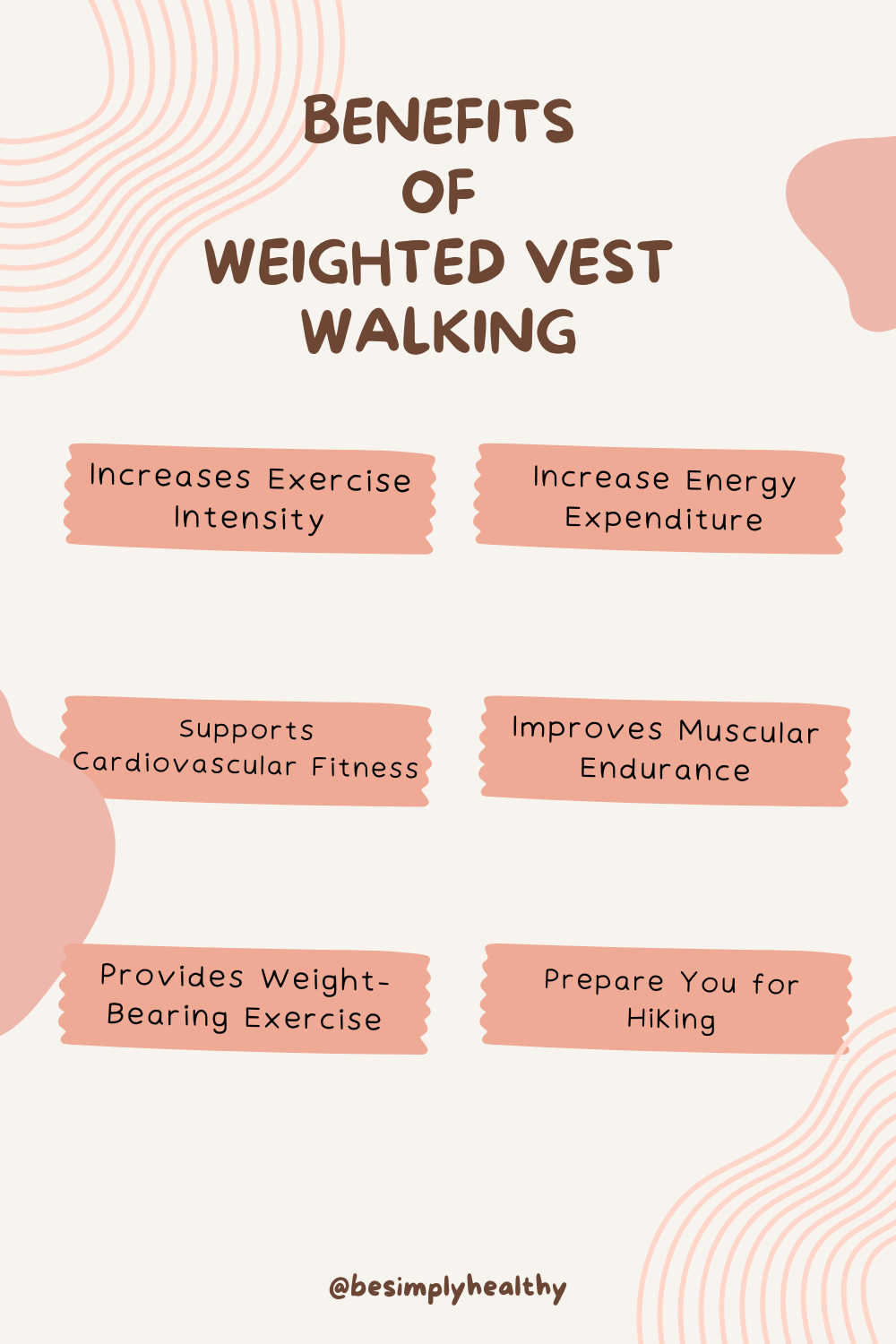
1. Increases Exercise Intensity
Perhaps the most immediate benefit is increased exercise intensity.
Because your body must move additional external load, walking becomes more physically demanding compared with regular walking at the same pace.
This increased demand can elevate heart rate and breathing while allowing many people to continue exercising at a comfortable walking speed.
For beginners who find regular walking no longer challenging, this can provide an effective way to increase workload without switching to jogging.
2. May Increase Energy Expenditure
One of the most common questions is whether weighted vest walking burns more calories.
In general, carrying additional weight increases the amount of work your body performs during movement. This typically increases energy expenditure compared with walking without extra weight.
However, the exact increase varies depending on several factors, including:
- •Body weight
- •Vest weight
- •Walking speed
- •Walking duration
- •Terrain
- •Individual fitness level
There is no single percentage increase that applies to everyone.
It's also important to remember that greater calorie expenditure alone does not guarantee fat loss. Long-term body weight changes still depend primarily on maintaining an appropriate calorie balance over time.
3. Supports Cardiovascular Fitness
Your heart and lungs work harder when moving additional weight.
Over time, progressive overload can contribute to improvements in cardiorespiratory fitness.
Many recreational hikers and military training programs have long incorporated loaded walking because it challenges the cardiovascular system while remaining relatively low impact.
Walking with a weighted vest should still feel sustainable. You should be able to carry on a conversation during most sessions unless intentionally performing higher-intensity intervals.
4. Improves Muscular Endurance
Walking with additional load places greater demand on muscles throughout the lower body.
These include:
- •Quadriceps
- •Hamstrings
- •Gluteal muscles
- •Calves
Your core muscles also work harder to stabilize your torso during movement.
Although weighted walking should not replace a structured resistance training program for building muscle, it can improve muscular endurance and functional strength.
5. Provides Weight-Bearing Exercise
Walking is already a weight-bearing activity.
Adding a moderate external load may increase mechanical loading on bones.
Weight-bearing exercise plays an important role in maintaining bone health throughout adulthood.
While weighted vest walking should not be considered a treatment for osteoporosis, appropriately prescribed weight-bearing exercise is commonly recommended as part of a healthy lifestyle.
6. Can Prepare You for Hiking or Rucking
If you enjoy hiking or plan to participate in rucking events, walking with a weighted vest can help prepare your body for carrying additional loads.
Unlike holding weights in your hands, a vest more closely mimics the demands of carrying a backpack while allowing a natural walking pattern.
Training gradually can help improve comfort and confidence before longer outdoor adventures. ### 7. May Improve Postural Muscle Endurance
A properly fitted weighted vest encourages your trunk muscles to work harder to maintain an upright posture during walking.
These muscles include:
- •Abdominals
- •Obliques
- •Lower back muscles
- •Hip stabilizers
Maintaining good posture becomes even more important as external load increases.
The vest should fit snugly without shifting excessively during movement. Poorly fitted equipment can alter walking mechanics and increase discomfort.
8. Offers a Low-Impact Way to Progress
Many beginners eventually reach a point where their regular walks no longer feel challenging.
Some people respond by immediately trying to run.
For many adults, however, running may not be comfortable due to:
- •Joint discomfort
- •Previous injuries
- •Higher body weight
- •Personal preference
Adding a modest amount of weight allows many people to increase exercise intensity while continuing to enjoy walking.
This makes weighted vest walking an appealing progression option for individuals who prefer lower-impact activities.
9. Can Help Break Through Fitness Plateaus
Progressive overload is one of the fundamental principles of exercise.
Your body gradually adapts to repeated physical activity.
Eventually, the same walk requires less effort than when you first started.
A weighted vest provides one method of progressive overload.
Other ways include:
- •Walking farther
- •Walking faster
- •Walking uphill
- •Adding intervals
- •Increasing walking frequency
A weighted vest should be viewed as one progression tool rather than the only option.
Can Walking with a Weighted Vest Help with Fat Loss?
This is probably the most searched question online.
The short answer is:
It may help—but indirectly.
Walking with a weighted vest can increase energy expenditure because your body performs more work.
However, body fat is lost when you consistently use more energy than you consume over time.
No exercise—including weighted walking—can override a long-term calorie surplus.
For sustainable fat loss, combine:
- •Regular physical activity
- •Resistance training
- •Balanced nutrition
- •Adequate protein intake
- •Good sleep habits
- •Stress management
Weighted vest walking can be one valuable piece of that overall lifestyle.
Does a Weighted Vest Burn Significantly More Calories?
Current evidence suggests calorie expenditure generally increases as external load increases.
However, the exact amount depends on:
- •Body size
- •Walking speed
- •Vest weight
- •Distance
- •Terrain
- •Individual efficiency
Because these variables differ from person to person, it's impossible to give one accurate calorie number.
Be cautious of online calculators or influencers claiming exact calorie increases without considering these variables.
Weighted Vest Walking vs Regular Walking
Both forms of walking are excellent for health.
Regular walking offers:
- •Easy recovery
- •Lower physical demand
- •Excellent consistency
- •Suitable for almost everyone
Weighted walking may offer:
- •Greater exercise intensity
- •Higher heart rate
- •More muscular demand
- •Increased energy expenditure
Neither option is universally "better."
The best choice depends on your:
- •Goals
- •Experience
- •Health status
- •Comfort
- •Recovery ability
For many beginners, building a consistent walking habit should come before adding external weight.
Weighted Vest Walking vs Rucking
These terms are often confused.
Although similar, they are not identical.
Weighted Vest Walking
- •Weight carried on the torso
- •Even weight distribution
- •Less shoulder loading
- •Convenient for neighborhood walks
Rucking
- •Weight carried inside a backpack
- •More hiking-oriented
- •Greater shoulder and upper-back demand
- •Common in military training and outdoor recreation
Both increase walking intensity.
Many beginners find weighted vests more comfortable for shorter walks, while hikers often prefer backpacks for longer outdoor sessions.
Common Myths About Weighted Vest Walking
Myth 1: It Melts Fat
Reality:
A weighted vest can increase exercise intensity, but fat loss still depends on maintaining an appropriate calorie deficit over time.
Myth 2: Heavier Is Always Better
Reality:
Using excessive weight increases stress on joints and may negatively affect walking mechanics.
Progressive overload should be gradual.
Myth 3: You Can Skip Strength Training
Reality:
Walking with a weighted vest is not a substitute for a structured resistance training program.
Strength training remains important for muscle strength, bone health, and long-term functional fitness.
Myth 4: Everyone Should Use One
Reality:
Weighted vest walking isn't appropriate for every individual.
Some people should consult a healthcare professional before beginning.
Who Should Avoid Weighted Vest Walking?
Weighted walking may not be appropriate for everyone.
Speak with a qualified healthcare professional before starting if you have:
- •Significant knee pain
- •Hip arthritis
- •Severe osteoporosis
- •Balance disorders
- •Recent surgery
- •Acute injuries
- •Chronic back pain
- •Uncontrolled cardiovascular disease
Pregnant individuals should also consult their healthcare provider before using external weights during exercise.
If walking with a vest causes persistent pain—not simply muscle fatigue—stop exercising and seek appropriate medical advice.
How Heavy Should Your Weighted Vest Be?
For beginners, a conservative starting point is generally 5–10% of your body weight, provided you already walk comfortably without pain.
Instead of immediately increasing weight:
- Become comfortable with the vest.
- Improve walking duration.
- Maintain excellent posture.
- Gradually increase difficulty only if sessions remain comfortable.
More weight does not automatically produce better results.
Consistency almost always matters more. ## Beginner 4-Week Weighted Vest Walking Plan
If you're new to weighted vest walking, resist the temptation to progress too quickly. Your muscles, joints, and connective tissues need time to adapt.
Here's a simple progression plan that prioritizes consistency and good technique.
Week 1: Learn the Basics
Goal:
Become comfortable wearing the vest.
Recommendations:
- •Wear a vest weighing about 5% of your body weight.
- •Walk 20–25 minutes.
- •Choose flat, even surfaces.
- •Walk 2–3 days during the week.
- •Focus on posture rather than speed.
Week 2: Build Consistency
Goal:
Increase total walking time.
Recommendations:
- •Continue using the same weight.
- •Walk 25–35 minutes.
- •Walk 3–4 days during the week.
- •Maintain a comfortable pace where conversation is still possible.
Week 3: Add a Slight Challenge
Goal:
Increase training volume gradually.
Recommendations:
- •Walk 30–40 minutes.
- •Add gentle hills if available.
- •Continue prioritizing good posture.
- •Only increase vest weight if previous weeks felt comfortable.
Week 4: Progress Carefully
Goal:
Improve fitness while maintaining recovery.
Recommendations:
- •Walk 35–45 minutes.
- •Continue 3–5 sessions per week.
- •Increase weight only if your walking mechanics remain unchanged.
- •Include at least one easy recovery walk without the vest.
Remember, there is no prize for progressing as quickly as possible. Long-term consistency almost always produces better results than short bursts of overly aggressive training.
Safety Tips for Weighted Vest Walking
Following a few simple safety practices can help reduce the risk of discomfort or injury.
Wear the Vest Correctly
The vest should fit snugly against your torso without bouncing excessively.
A loose vest can shift during walking and alter your natural movement.
Maintain Good Posture
Keep your:
- •Head upright
- •Shoulders relaxed
- •Chest tall
- •Core gently engaged
Avoid leaning forward excessively to compensate for the added weight.
Choose Supportive Footwear
Comfortable walking shoes with adequate support remain important.
Replacing worn-out footwear may reduce unnecessary stress on the feet and lower limbs.
Increase One Variable at a Time
Avoid increasing multiple training variables simultaneously.
Instead, progress gradually by adjusting only one of the following:
- •Walking duration
- •Walking speed
- •Terrain
- •Vest weight
This approach allows your body to adapt more comfortably.
Listen to Your Body
Mild muscle fatigue is expected when increasing exercise intensity.
However, stop exercising if you experience:
- •Sharp pain
- •Persistent joint pain
- •Dizziness
- •Chest discomfort
- •Shortness of breath beyond normal exercise fatigue
If symptoms continue, seek medical advice before resuming exercise.
Frequently Asked Questions
Is walking with a weighted vest better than regular walking?
Not necessarily.
Regular walking provides substantial health benefits and is appropriate for most people.
A weighted vest simply increases exercise intensity and may be useful for individuals who want additional challenge after building a consistent walking habit.
Can I wear a weighted vest every day?
Many healthy adults may tolerate frequent weighted walking if progression is gradual and recovery is adequate.
However, alternating weighted and unweighted walks may help reduce repetitive stress while still allowing consistent physical activity.
Can weighted vest walking replace strength training?
No.
Although weighted walking challenges your muscles, it does not provide the same range of movement or progressive resistance as a structured strength training program.
Ideally, combine walking with at least two weekly strength-training sessions targeting all major muscle groups.
Does walking uphill with a weighted vest increase the challenge?
Yes.
Walking uphill naturally increases exercise intensity.
Combining hills with a weighted vest creates an even greater training stimulus, so beginners should introduce hills gradually rather than immediately combining both challenges.
What is the best weighted vest for beginners?
Look for a vest that:
- •Fits securely
- •Distributes weight evenly
- •Allows small weight adjustments
- •Feels comfortable during walking
- •Does not restrict breathing or arm movement
Comfort and fit are generally more important than maximum weight capacity.
Key Takeaways
Walking with a weighted vest can be an effective way to increase the intensity of your daily walks without immediately transitioning to higher-impact activities.
Current evidence suggests it may:
- •Increase exercise intensity
- •Raise energy expenditure
- •Improve cardiovascular fitness
- •Enhance muscular endurance
- •Support functional fitness
- •Help prepare for hiking or rucking
However, it's important to have realistic expectations.
A weighted vest is not a magic fat-loss tool, and using excessive weight too soon may increase injury risk.
Start light, progress gradually, maintain good posture, and focus on consistency rather than intensity alone.
Combined with balanced nutrition, regular strength training, adequate sleep, and an active lifestyle, weighted vest walking can become a valuable part of a sustainable long-term fitness routine.
Continue Your Health Journey
Want more science-backed fitness and nutrition advice?
Explore our other evidence-based guides, including:
- •Walking After Meals: What Science Says
- •Walking vs Running for Fat Loss
- •Progressive Overload for Beginners
- •Best High-Protein Foods for Weight Loss
- •Protein Timing: Does It Really Matter?
- •Zone 2 Cardio Explained
Comments (0)
Share your thoughts and experiences
No comments yet. Be the first to share your thoughts!