Can You Spot Reduce Fat? What Targeted Workouts Really Change
Can crunches burn belly fat or leg workouts reduce thigh fat? Learn why spot reduction does not work, what targeted exercise can improve, and how to build a realistic fat-loss plan.
Click a star to rate
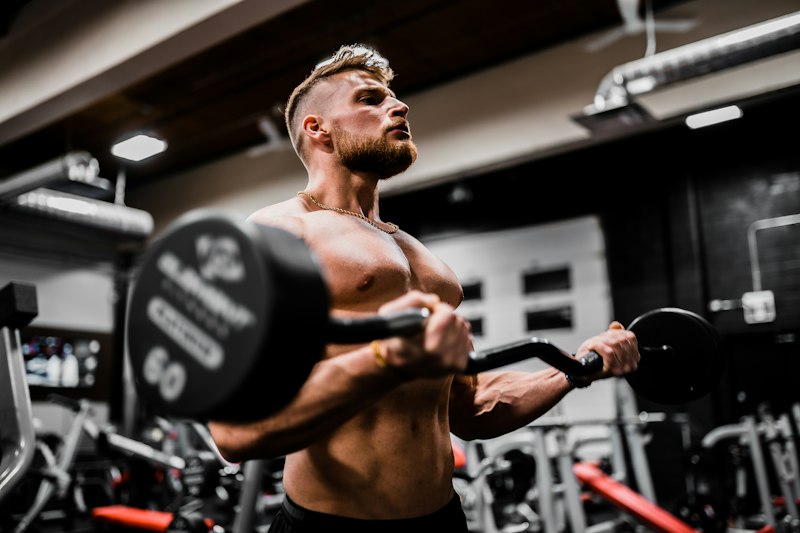
No. You cannot reliably choose where your body loses fat by exercising that body part.
Crunches can make your abs stronger. Squats can build your legs. Push-ups can strengthen your chest and arms. But doing hundreds of repetitions for one area does not tell your body to use the fat sitting directly above those muscles for fuel.
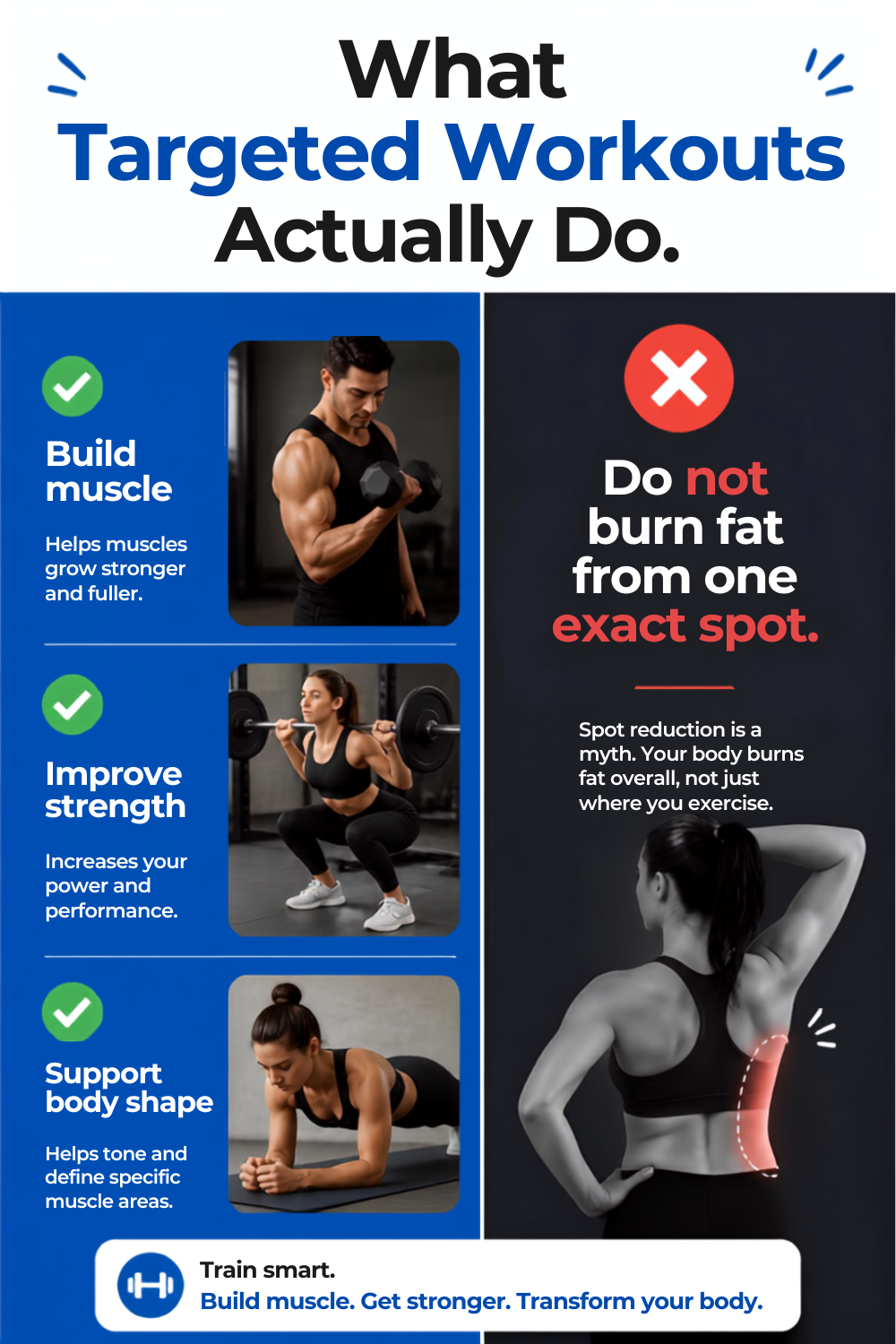
That answer can feel discouraging when you want changes in your stomach, thighs, arms, hips, or back. The useful part is that targeted exercise is still worth doing. It can build muscle, improve strength, and change how an area looks as your overall body-fat level changes. The goal is to use local exercises for what they can do, then support them with a whole-body fat-loss approach.
The Short Answer: Fat Loss Is Systemic, Muscle Training Is Local
A simple way to think about this is:
- •Fat loss happens across the body. Your body releases stored energy from fat tissue according to many factors, including genetics, hormones, sex, age, and your overall energy balance.
- •Muscle training happens where you apply resistance. Biceps curls train the biceps. Glute bridges train the glutes. Planks train the muscles that stabilize your trunk.
- •Your appearance can still change in a specific area. Building muscle in an area may improve shape, posture, strength, and definition. It just is not the same as melting fat from that area.
This distinction matters because it prevents a frustrating cycle: doing daily ab workouts for months, seeing little change in waist fat, and deciding exercise does not work. The problem is not necessarily the effort. It is the expectation placed on one type of exercise.
What “Spot Reduction” Usually Means
People use the phrase spot reduction in a few different ways. Those goals deserve different answers.
“I Want Less Fat in One Area”
This is the classic spot-reduction goal: doing abdominal workouts to lose belly fat, triceps exercises to reduce upper-arm fat, or inner-thigh exercises to shrink the thighs.
Targeted exercise is not a dependable way to create targeted fat loss. When body fat decreases, it comes from multiple areas. The order is individual. One person may notice facial changes first, another may see changes in the waist, and another may lose from the legs before the stomach.
“I Want This Area to Look Firmer or More Defined”
This goal is more realistic. Resistance training can increase or preserve muscle in the trained area. If body fat later decreases, the muscle underneath may become more visible.
For example, ab exercises will not selectively burn stomach fat, but they can make the abdominal muscles stronger. Glute training can build the glutes. Back exercises can improve pulling strength and posture. These changes can matter even before major scale changes happen.
“I Want to Feel Stronger in This Area”
This is where targeted training is especially useful. If you want stronger legs for stairs, stronger shoulders for carrying groceries, or a more stable trunk for lifting, focused exercises are appropriate. The training outcome is local, even though fat loss is not.
Why Your Body Does Not Follow a “Burn the Nearest Fat” Rule
During activity, your muscles need energy. Your body uses a mix of available fuels, including carbohydrate and fat, but it does not simply pull fat from the closest body part.
When you perform a crunch, the abdominal muscles are working. That does not mean the fat over the stomach is the exclusive fuel source. Fat metabolism and blood flow are regulated throughout the body, not directed by the location of the exercise.
A small 2011 controlled study is often used to explain this point. Participants performed abdominal exercises for six weeks, but the training did not significantly reduce abdominal fat compared with the control group. A separate localized leg-training study also found that training one leg did not produce greater fat loss in that trained leg than elsewhere in the body. These are not the only reasons to reject spot reduction, but they match the broader practical finding: local training is valuable for muscle and performance, not for choosing the location of fat loss.
Body-fat distribution is also personal. Genetics and biological factors influence where people tend to store fat and which areas seem slower to change. That is why copying someone else’s workout cannot guarantee the same visual result.
Do Ab Exercises Burn Belly Fat?
Ab exercises burn some energy because all movement uses energy. But the amount used by a short ab routine is usually modest, and it does not come specifically from belly fat.
That does not make ab training pointless. A well-planned core routine can help you:
- •improve trunk strength and control
- •make everyday movements such as lifting and carrying feel steadier
- •support performance in walking, running, lifting, and sports
- •build the abdominal muscles that may become more visible as overall body fat changes
A better question is not “Which exercise burns belly fat?” It is “Which training plan can I repeat long enough to improve my strength, activity level, and overall body composition?”
For many beginners, that plan includes full-body resistance training, regular walking or another preferred cardio activity, and eating habits that make a modest calorie deficit easier to sustain.
Can Leg Workouts Reduce Thigh Fat?
Leg workouts can make your thighs and glutes stronger. They can also use more total muscle mass than a small isolation exercise, so they may be a useful part of a complete workout. But they cannot promise that thigh fat will disappear before fat in another area.
Useful lower-body exercises include:
- •squats or chair squats
- •step-ups
- •lunges, if comfortable for your joints
- •Romanian deadlifts
- •glute bridges
- •calf raises
Choose movements you can perform with good control and progress gradually. You do not need to chase muscle soreness or use punishingly high repetitions to make an exercise count.
If your thighs are an area you feel self-conscious about, remember that training them can still produce a positive result. Stronger leg muscles can improve mobility, balance, stair climbing, and confidence in daily movement while the larger fat-loss process unfolds.
Can Arm Workouts Reduce Arm Fat?
The same rule applies to arms. Triceps extensions, biceps curls, rows, and push-ups can build upper-body strength, but they do not selectively remove upper-arm fat.
A practical upper-body routine can include a push, a pull, and arm work:
- •wall or incline push-ups
- •dumbbell floor presses
- •resistance-band rows
- •dumbbell rows
- •overhead presses
- •biceps curls
- •triceps extensions
This approach is usually more useful than doing only arm exercises every day. It trains the major upper-body movement patterns and gives you a clearer way to progress.
What Actually Helps Reduce Overall Body Fat?
There is no single exercise that works for everyone. The most effective plan is usually the one that creates enough consistent activity and nutrition change without becoming exhausting, expensive, or impossible to maintain.
1. Create a Manageable Energy Deficit
Body-fat loss generally requires using more energy over time than you consume. That does not mean you need to track every calorie or eat as little as possible.
A manageable deficit often comes from a combination of habits:
- •serving meals on a plate instead of eating from packages
- •including protein and high-fiber foods so meals are more filling
- •reducing frequent liquid calories if they are a meaningful part of your intake
- •planning satisfying meals rather than relying on willpower when very hungry
- •keeping treats in your routine in portions you can repeat without guilt
Extreme restriction can make training, sleep, mood, and consistency worse. A slower approach that you can keep doing is often more valuable than a short, aggressive plan you abandon.
2. Build Muscle With Resistance Training
Resistance training does not replace nutrition, but it is a strong companion to fat loss. It helps you maintain or build strength and can help preserve lean tissue while losing weight.
Begin with two or three full-body sessions per week. A simple session could include:
- •a squat or sit-to-stand variation
- •a hip-hinge movement, such as a dumbbell Romanian deadlift
- •a push movement
- •a row or pull movement
- •a core exercise
- •an optional carry, calf raise, or arm exercise
Start with a weight and number of repetitions that leave you feeling challenged but in control. Add a little resistance, a few repetitions, or another set only when your current version feels manageable with good form.
3. Add Regular Cardio and Everyday Movement
Cardio does not have to mean running. Brisk walking, cycling, dancing, swimming, and treadmill sessions can all count.
Current U.S. physical-activity guidance recommends 150 to 300 minutes of moderate-intensity aerobic activity per week for adults, along with muscle-strengthening activity on two or more days each week. If that sounds far from your current routine, start lower. Ten-minute walks after meals or a few short treadmill sessions still build the habit.
The best choice is often the activity you can do consistently. A person who walks four times each week may make more progress than someone who repeatedly starts an intense workout plan and stops after ten days.
4. Protect Sleep and Recovery
Sleep does not decide where fat leaves first, but poor recovery can make a fat-loss plan harder to follow. When you are tired, hunger, cravings, training quality, and daily movement can all become more difficult to manage.
Aim for a routine that supports enough sleep, regular meals, and recovery days. You do not need a perfect schedule. You need one that makes the next workout and the next meal decision easier.
A Realistic Weekly Plan for Beginners
Here is an example of how someone could train for overall fat loss while still strengthening the areas they care about.
Monday: Full-Body Strength
Do a squat variation, hip hinge, push, row, core exercise, and optional arm work.
Tuesday: Brisk Walk or Treadmill Session
Walk at a pace that raises your breathing but still allows short sentences. Start with 20 to 30 minutes if that feels realistic.
Wednesday: Rest or Easy Movement
Take a gentle walk, stretch, or simply focus on usual daily movement.
Thursday: Full-Body Strength
Repeat Monday’s movement patterns with small changes if preferred. For example, use a chair squat instead of a bodyweight squat or an incline push-up instead of a wall push-up.
Friday: Cardio You Enjoy
Walk, cycle, dance, or use another accessible activity for 20 to 40 minutes.
Saturday: Optional Targeted Work
Add 10 to 20 minutes of exercises for a personal goal, such as glutes, abs, upper body, or mobility. Treat this as extra strength practice, not a fat-burning punishment.
Sunday: Rest and Prepare
Plan a few meals, set out workout clothes, or schedule your walks. These small actions often matter more than finding a more complicated routine.
The “Fat-Burning Exercise” Marketing Trap
Products and programs often use phrases such as “melt belly fat,” “erase back fat,” or “shrink your thighs.” Be skeptical of any offer that promises to change one body area without mentioning overall habits, time, or individual variation.
A product may still be useful if it solves a practical problem. For example:
- •resistance bands can make home strength training more accessible
- •adjustable dumbbells can make progressive overload easier
- •a comfortable exercise mat may make floor work more tolerable
- •a basic step tracker can help some people notice their daily activity pattern
But equipment does not create targeted fat loss. Before buying anything, ask whether it makes a specific habit easier to repeat. If the answer is no, it is probably not necessary.
Affiliate disclosure: This article may contain affiliate links. If you buy through a qualifying link, the site may earn a commission at no extra cost to you. Recommendations should be based on usefulness and suitability, not commission.
Common Mistakes That Slow Progress
Doing Hundreds of Repetitions for One Area
High-repetition ab, arm, or leg workouts may improve muscular endurance, but they are not a shortcut to local fat loss. A balanced program is usually a better use of your time.
Ignoring Strength Training Because You Want to “Get Smaller”
Some people avoid weights because they fear becoming bulky. Building a large amount of muscle takes purposeful, sustained training and adequate nutrition. For most beginners in a fat-loss phase, resistance training is more likely to improve strength and help maintain a firmer, more capable body than to create unwanted size.
Changing Everything at Once
A strict diet, daily intense workouts, no social meals, and poor sleep are difficult to maintain together. Choose one or two changes you can keep for several weeks, then build from there.
Judging Progress Only by One Body Area
The stomach, hips, thighs, and arms can change slowly. Track other signs too: workout performance, walking pace, waist or clothing fit, energy, sleep, and how consistently you followed your plan.
When to Get Individual Advice
General fitness guidance is appropriate for many adults, but individual support can be helpful if you have significant joint pain, a recent injury, are pregnant or postpartum, have an eating-disorder history, or are managing a medical condition or medication that affects weight, appetite, or exercise tolerance. A qualified clinician or registered dietitian can help adapt the plan safely.
FAQ
Can you spot reduce belly fat with crunches?
No. Crunches strengthen the abdominal muscles, but they do not reliably cause fat to come off the stomach first. Pair core work with full-body strength training, regular activity, and sustainable nutrition habits.
What exercise burns the most belly fat?
No exercise can guarantee belly-fat loss on its own. Activities that you can do regularly, such as brisk walking, cycling, and full-body resistance training, can support overall fat loss when combined with an appropriate eating pattern.
Why am I losing weight but not belly fat?
Fat-loss patterns vary. Your body may be changing in areas you notice less first, while the stomach changes later. Look at long-term trends in measurements, clothing fit, strength, and consistency rather than judging progress week to week.
Can you lose thigh fat by walking?
Walking can help increase overall energy expenditure and improve fitness, which may support overall fat loss. It cannot choose the thighs as the specific place where fat is lost.
Should I do targeted exercises at all?
Yes. Targeted exercises are useful for building strength, improving muscle, practicing movement skills, and working toward performance goals. Use them because they strengthen that area, not because they promise to remove nearby fat.
The Bottom Line
You cannot command your body to burn fat from one exact spot. What you can do is build muscle in the areas you want to strengthen, increase your overall activity, eat in a way that supports a sustainable calorie deficit, and give the process enough time.
Keep the exercises you enjoy for your abs, arms, legs, or glutes. Just place them inside a broader plan. That combination is more honest, more effective, and much easier to stick with than chasing a “fat-burning” move for one body part.
Sources
- •[Vispute et al., The Effect of Abdominal Exercise on Abdominal Fat](https://pubmed.ncbi.nlm.nih.gov/21804427/)
- •[Ramírez-Campillo et al., Regional Fat Changes Induced by Localized Muscle Endurance Resistance Training](https://pubmed.ncbi.nlm.nih.gov/23222084/)
- •[U.S. Physical Activity Guidelines: Questions and Answers](https://odphp.health.gov/our-work/nutrition-physical-activity/physical-activity-guidelines/about-physical-activity-guidelines/questions-answers)
- •[American College of Sports Medicine: Weight Loss Mythbusting](https://acsm.org/mythbusting-weight-loss/)
- •[American College of Sports Medicine: Resistance Training and Lean Tissue During Weight Loss](https://acsm.org/weight-loss-tissue-loss-weight-regain/)
Comments (0)
Share your thoughts and experiences
No comments yet. Be the first to share your thoughts!