Creatine vs Protein Powder: Which Should You Take First for Fat Loss?
Creatine and protein powder do different jobs. Learn which one may be more useful first for fat loss, muscle retention, resistance training, and your budget.
Click a star to rate
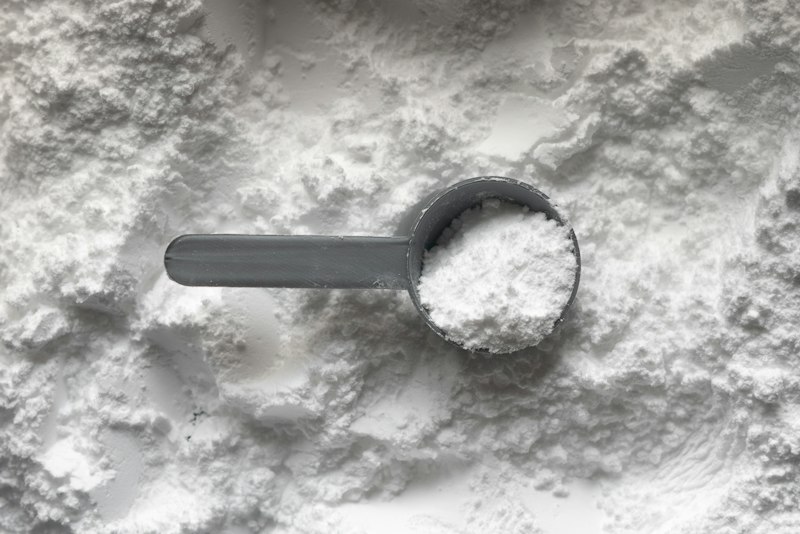
If you are trying to lose fat without losing muscle, protein powder is usually the better first purchase when you struggle to eat enough protein. Creatine may be more useful when your protein intake is already consistent and you are doing regular resistance training.
They are not competing versions of the same supplement.
Protein powder is food convenience. It helps you reach a protein target when meals alone fall short. Creatine is a performance supplement. It can support repeated high-effort exercise and, over time, may help you get more from resistance training.
That difference matters because neither product directly causes fat loss. A calorie deficit, enough protein, resistance training, sleep, and consistency still do most of the work.
| Choose protein powder first if... | Choose creatine first if... |
|---|---|
| You regularly finish the day below your protein target. | You already eat enough protein most days. |
| You need an easy breakfast, snack, or post-workout option. | You do resistance training consistently and want to improve training capacity. |
| You are in a calorie deficit and want meals to feel more filling. | You understand that a small increase in scale weight can happen from water stored in muscle. |
| You are choosing only one supplement on a limited budget. | Your food routine is already solid and you want a simple, well-studied addition. |
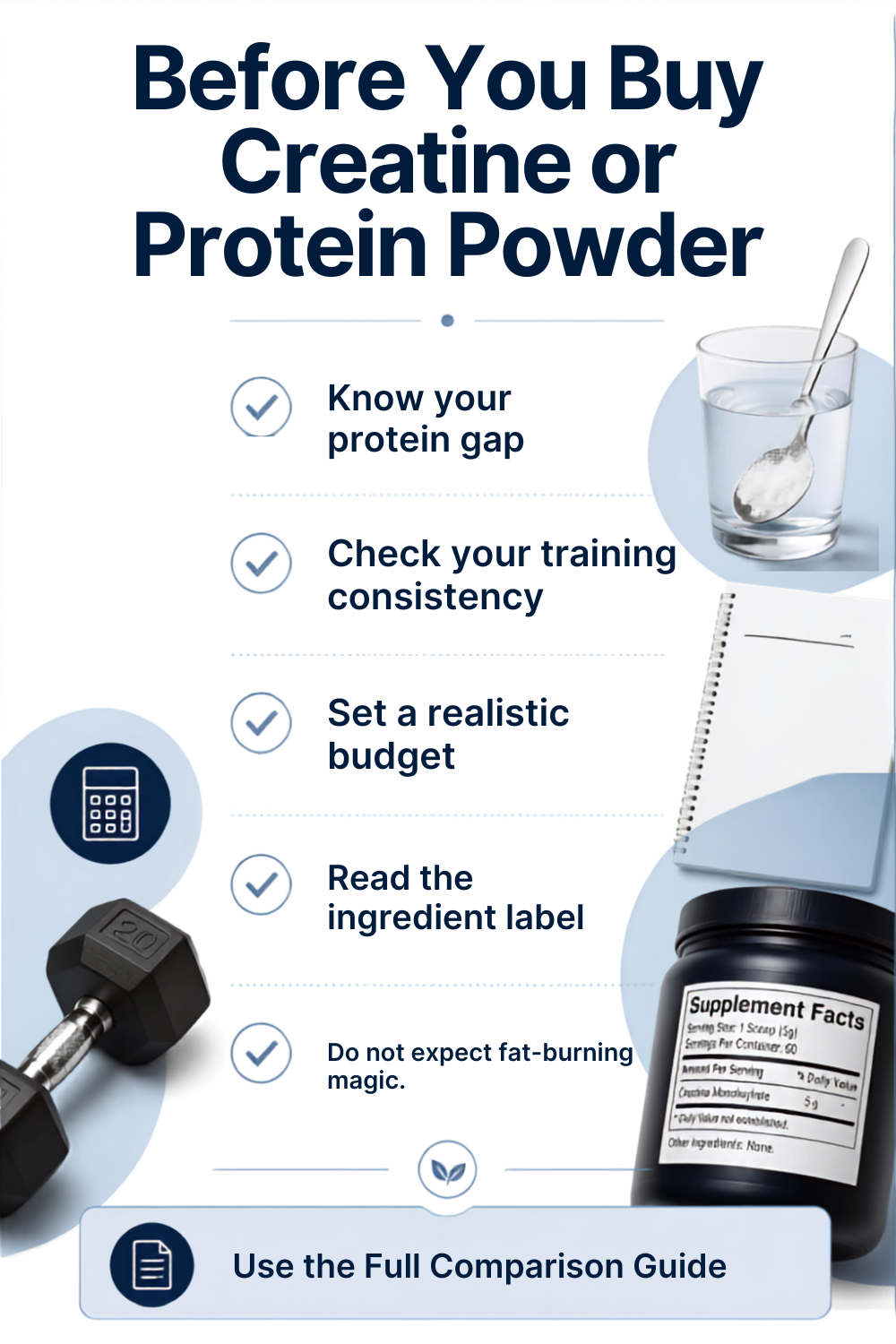
The short answer: which is better for fat loss?
Protein powder has the more direct role in a fat-loss plan because it can make it easier to eat enough protein without adding a large amount of calories.
Creatine is not a fat burner. It does not replace a calorie deficit, and it will not make body fat disappear on its own. Its value is more indirect: if it helps you train with more quality effort over time, it may support strength and lean-mass gains alongside resistance training.
For a beginner, this order usually makes sense:
- Build regular meals and a realistic calorie deficit.
- Make sure protein intake is adequate.
- Start resistance training consistently.
- Use protein powder if food alone does not make protein practical.
- Consider creatine monohydrate once the basics are already in place.
You can take both. You do not need to take both.
What protein powder actually does
💡 Recommended Product: Orgain Organic Vegan 21g Protein Powder, Peanut Butter, 2.03 lb | Plant based protein, 7g prebiotic fiber, low net carb, no added sugar or dairy ingredients, for shakes & smoothies
View on Amazon →Protein powder is a concentrated source of protein. Whey, casein, soy, pea, rice, and blended plant proteins are common options. The best choice depends on your dietary preferences, budget, tolerance, and how much protein the serving provides.
Protein is important during fat loss because your body needs it for many functions, including maintaining and repairing muscle tissue. When calories are lower, eating enough protein can also help meals feel more satisfying.
A protein shake is not automatically better than chicken, fish, eggs, tofu, yogurt, beans, or other protein-rich foods. Whole foods offer vitamins, minerals, texture, and meal satisfaction that a shake may not provide.
The advantage is convenience.
For example, someone who eats toast or coffee for breakfast, has a light lunch, and only gets a substantial protein serving at dinner may struggle to reach a useful daily intake. A protein shake can close that gap quickly. Someone who already eats protein-rich meals three or four times a day may not need one at all.
Protein powder can be useful when:
- •You are often short of your daily protein target.
- •You need a fast breakfast or snack.
- •You find high-protein meals difficult to prepare every day.
- •You are managing appetite during a calorie deficit.
- •You have a long gap between meals and tend to overeat later.
Protein powder is less useful when:
- •You already meet your protein needs through food.
- •You are using shakes to replace nearly all balanced meals.
- •The product adds a lot of sugar, calories, or extras you do not actually want.
- •You dislike it enough that you will not use it consistently.
What creatine actually does
Creatine is a compound your body makes and stores mostly in muscle. It helps support short, high-intensity efforts such as lifting weights, sprinting, jumping, and repeated hard sets.
Creatine monohydrate is the form with the strongest research base. It is usually sold as an unflavored powder, is generally inexpensive per serving, and does not need to be taken only before or after a workout.
For people who lift regularly, creatine may help improve training performance over time. That can mean an extra rep, slightly better repeated effort, or better ability to maintain training quality. Those small differences can matter over months, especially when training is structured and progressive.
Creatine does not supply protein. It does not replace meals. It does not make up for a low-protein diet, inconsistent workouts, or very low calorie intake.
Does creatine cause weight gain?
Creatine can increase scale weight, especially in the first few weeks. This is usually related to water being stored inside muscle cells, not body-fat gain.
That can be frustrating when fat loss is your main goal. If you judge progress only by the scale, creatine can make it harder to interpret what is happening.
Use more than one progress marker:
- •Waist or hip measurements
- •How clothes fit
- •Strength or workout performance
- •Progress photos taken under similar conditions
- •Weekly average body weight instead of one daily weigh-in
A temporary change on the scale is not the same as gaining fat. Still, if scale changes affect your motivation or make you likely to stop your plan, it may be sensible to delay creatine until your habits feel more settled.
Creatine vs protein powder: the practical differences
| Factor | Creatine monohydrate | Protein powder |
|---|---|---|
| Main purpose | Supports short, intense exercise performance and resistance-training adaptations. | Helps increase daily protein intake conveniently. |
| Direct fat-loss effect | No direct fat-burning effect. | No direct fat-burning effect, but can support fullness and muscle retention when it helps meet protein needs. |
| Best for | People doing consistent resistance training. | People who struggle to get enough protein from meals. |
| Calories | Typically negligible. | Varies by product; often around 100–150 calories per serving, but check the label. |
| Scale-weight effect | May increase water weight in muscle. | Depends on total calorie intake and how it fits into the diet. |
| Common buying mistake | Expecting it to burn fat or treating water weight as fat gain. | Buying a product without checking protein per serving, calories, ingredients, or tolerance. |
A simple decision path
Start with one question: what is currently limiting your progress?
If you are not reaching your protein target
Protein powder is likely more useful.
You do not need a perfect number every day, but you need enough protein often enough to support your training and eating pattern. A shake is a practical tool if it prevents you from ending the day with very little protein.
A simple example: if your meals provide about 60 grams of protein but your realistic target is closer to 90 grams, a shake with 20 to 30 grams of protein may be helpful. It is filling a specific gap.
If your protein intake is already consistent
Creatine may be the more useful addition.
This is especially true if you train with weights two or more times weekly, use progressive overload, and want to improve your long-term training output. Creatine is not required for results, but it can be a sensible low-complexity supplement.
If you are not resistance training yet
Do not rush to buy creatine.
You can still take it, but the stronger reason to use it is its role in high-effort training. Your budget may be better spent on food, comfortable workout clothes or shoes, basic home equipment, or a protein option that helps you eat consistently.
If your budget allows only one product
Choose the product that solves the larger problem.
For most beginners trying to lose fat, that is usually protein powder if daily protein is low. If protein is already handled through food, creatine monohydrate is often the simpler and lower-cost option.
Can you take creatine and protein powder together?
Yes. You can mix creatine into a protein shake, water, or another drink. The combination is common because the products do different things.
There is no need to make the routine complicated. What matters most is taking creatine consistently if you choose to use it, and using protein powder only as needed to support your overall intake.
A basic approach is:
- •Protein powder: use it when a meal or snack is low in protein.
- •Creatine monohydrate: take a consistent daily amount according to the product label.
- •Training: focus on regular resistance workouts and gradual progression.
Timing is much less important than routine. A supplement schedule that you can keep is more useful than a highly precise plan you abandon after a week.
Common mistakes when choosing supplements for fat loss
Expecting either product to replace food habits
Supplements can support a plan. They do not build the plan for you.
If most meals are low in protein, vegetables, fiber, or overall nutrition, adding creatine will not fix that. If calories remain higher than your needs, protein powder will not automatically create fat loss.
Treating protein powder as a mandatory fitness product
Protein powder is optional. It is useful because it is convenient, not because it has a special ability that food lacks.
Try food first if that feels realistic. Use a shake when it makes consistency easier.
Buying expensive creatine blends
A basic creatine monohydrate product is usually the most practical place to start. Be cautious with expensive blends that make dramatic promises or hide the actual creatine amount in a proprietary formula.
Ignoring the nutrition label on protein powder
Look beyond the front of the tub. Check:
- •Protein per serving
- •Calories per serving
- •Added sugar
- •Allergen information
- •Sweeteners and ingredients you may not tolerate
- •Servings per container
- •Cost per serving
The “best” powder is often the one you can tolerate, afford, and use consistently.
Panicking over a scale increase after starting creatine
A change in body weight does not automatically mean fat gain. Review your weekly average, measurements, food intake, and training consistency before making decisions.
Safety notes worth knowing
Creatine and protein powder are not appropriate for every person in every situation.
If you have kidney disease, are pregnant or breastfeeding, take medication that may affect kidney function, have a medical condition, or have been advised to limit protein or supplements, speak with a qualified clinician before starting creatine or changing your protein intake.
Choose products from reputable companies, and do not assume that a supplement is high quality because it is popular online. Check labels carefully and look for credible third-party testing where available.
The bottom line
Protein powder and creatine can both fit a fat-loss plan, but they answer different needs.
Choose protein powder first when daily protein is the weak point. It can make a calorie deficit easier to manage and help you keep protein intake more consistent.
Choose creatine first when your protein intake is already covered and you are training with resistance consistently. It may help support better training performance over time, but it is not a fat burner.
If you are still building the basics, focus on meals, protein, resistance training, sleep, and a calorie intake you can sustain. Supplements work best when they make those habits easier—not when they are expected to replace them.
Comments (0)
Share your thoughts and experiences
No comments yet. Be the first to share your thoughts!