
How to Improve Your Balance at Any Age: Evidence-Based Beginner Guide
Learn how to improve your balance at any age with evidence-based exercises, practical tips, and a beginner-friendly routine that supports functional fitness, healthy aging, and confident movement.
Click a star to rate
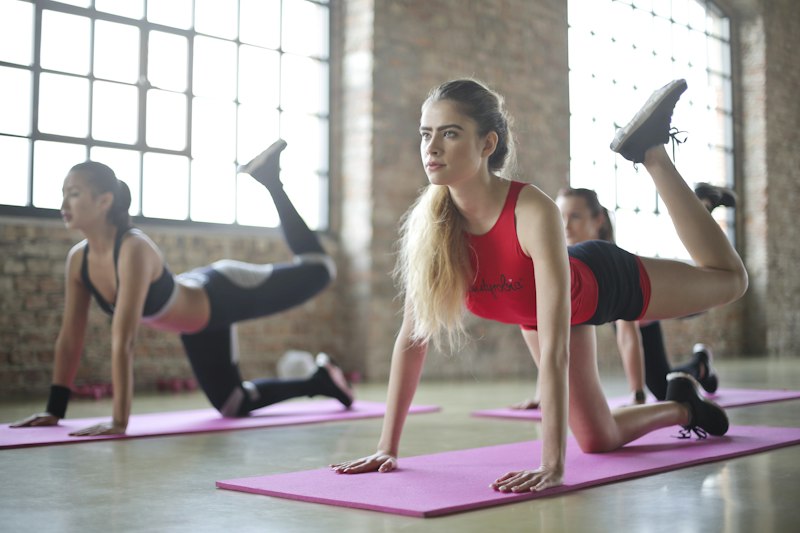
Balance is one of the most important—but often overlooked—components of physical fitness. Whether your goal is losing weight, exercising safely, preventing falls, or simply feeling more confident during everyday activities, improving your balance can make a meaningful difference.
Unlike many aspects of fitness that require specialized equipment, balance can often be improved with simple, consistent practice. Research shows that balance training helps strengthen communication between your brain, muscles, joints, eyes, and inner ear. Over time, these systems become more efficient, allowing you to move with greater stability and confidence.
The encouraging news is that balance is a trainable skill. Healthy adults of nearly every age can improve balance through regular practice, even if they have never exercised before.
Rather than focusing on quick fixes or expensive equipment, this guide explains what current scientific evidence tells us about balance training and provides practical exercises you can safely begin at home.
Quick Answer
If you want to improve your balance:
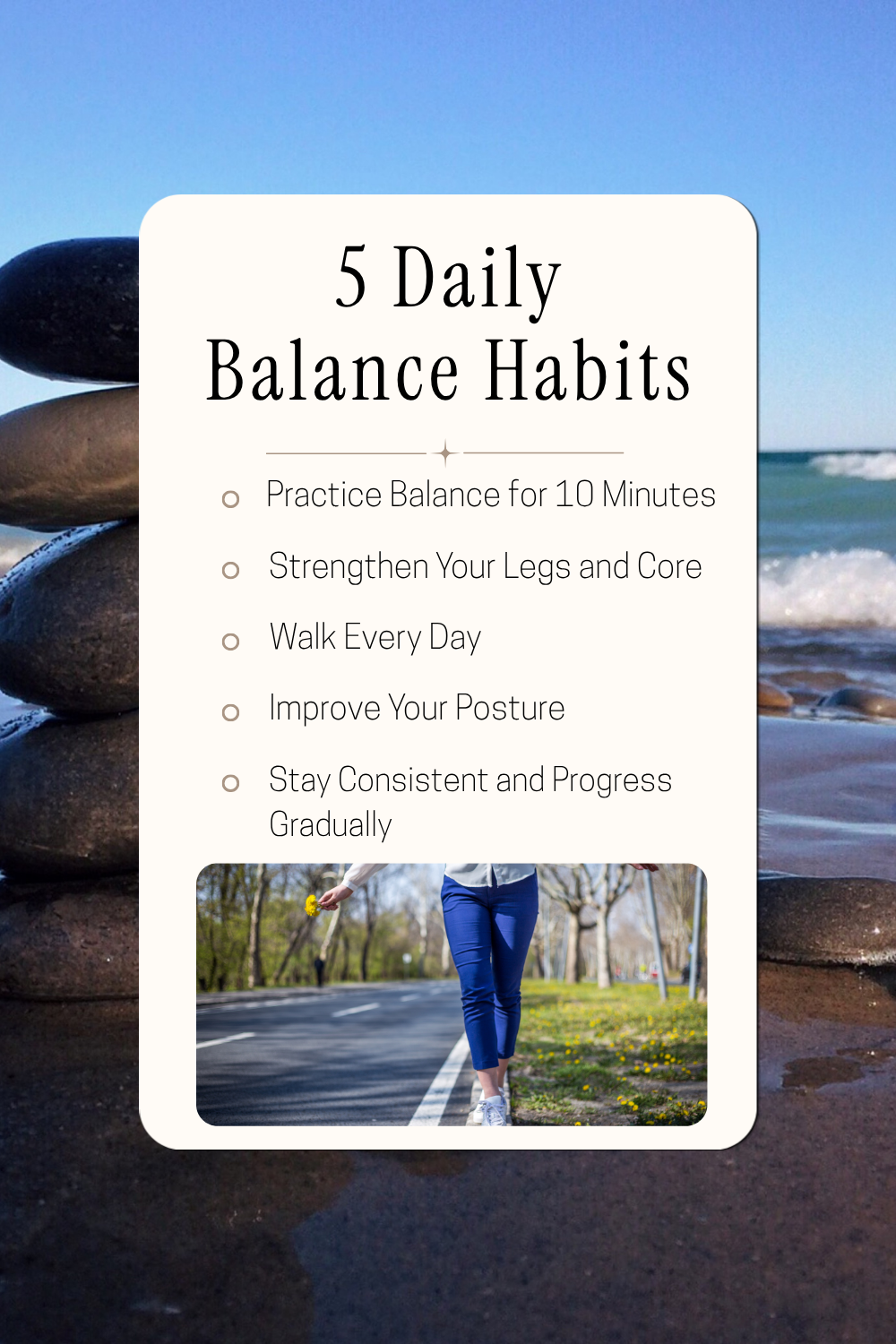
- •Practice balance exercises 2–4 days per week.
- •Strengthen your legs and core.
- •Stay physically active with regular walking.
- •Progress gradually by making exercises slightly more challenging over time.
- •Practice consistently rather than intensely.
Most people begin noticing improvements after several weeks of regular practice, although progress varies depending on age, fitness level, and medical conditions.
Why Balance Matters
Many people only think about balance after experiencing a fall or noticing increasing instability. In reality, balance affects nearly every movement you perform throughout the day.
Good balance helps you:
- •Walk more confidently
- •Climb stairs safely
- •Improve posture
- •Exercise with better technique
- •Reduce the risk of falls
- •Move more efficiently during daily activities
- •Maintain independence as you age
For beginners trying to lose weight, better balance can also improve exercise confidence. Feeling more stable often makes it easier to perform strength exercises, bodyweight movements, and walking programs consistently.
How Balance Works
Balance depends on several body systems working together continuously.
Your Brain
Your brain constantly processes information from multiple sources and determines how your body should respond to maintain stability.
Your Vision
Your eyes provide visual information about your surroundings and help your body determine orientation and movement.
Your Inner Ear
The vestibular system inside the inner ear detects head movement and changes in position. This system plays a major role in maintaining equilibrium.
Your Muscles and Joints
Sensors located throughout your muscles, tendons, and joints provide information about body position. This process is known as proprioception.
Your Core
Core muscles stabilize your spine and pelvis during movement, providing a strong foundation for balance and coordination.
When these systems communicate efficiently, everyday movements feel smooth and controlled.
Common Causes of Poor Balance
Balance naturally changes throughout life, but many factors besides aging may contribute.
Common causes include:
- •Physical inactivity
- •Muscle weakness
- •Reduced ankle or hip mobility
- •Poor posture
- •Certain medications
- •Vision changes
- •Vestibular disorders
- •Neurological conditions
- •Previous injuries
- •Excess body weight reducing movement confidence
Occasional unsteadiness after sitting for long periods is common. However, persistent dizziness, repeated falls, sudden balance changes, weakness on one side of the body, or difficulty walking should always be evaluated promptly by a qualified healthcare professional.
Can You Improve Balance at Any Age?
Yes—in most healthy adults, balance improves with regular practice.
Research involving balance training, resistance exercise, Tai Chi, and functional exercise programs consistently demonstrates improvements in stability, coordination, and fall prevention across a wide range of age groups.
The greatest improvements generally occur when programs combine:
- •Balance exercises
- •Lower-body strength training
- •Core strengthening
- •Walking or other aerobic activity
- •Progressive overload
Consistency matters much more than workout length. Ten to fifteen minutes performed several days each week often produces better long-term results than occasional long sessions.
Benefits of Better Balance
Improving balance offers benefits far beyond preventing falls.
Better Exercise Performance
Improved stability allows better control during squats, lunges, step-ups, and other functional movements.
Increased Confidence
Many beginners feel nervous about exercising. Better balance often increases confidence to stay active and try new activities.
Improved Posture
Balance training strengthens muscles responsible for maintaining upright posture during standing and walking.
Healthier Aging
Maintaining balance helps support independence and mobility throughout adulthood.
Functional Fitness
Balance training improves everyday movements such as reaching, carrying groceries, bending down, and getting up from a chair.
Injury Prevention
Better movement control may reduce the likelihood of losing balance during everyday activities or recreational exercise. ## Myth vs. Fact
Myth 1: Balance Only Matters for Older Adults
Reality:
Balance is important throughout life.
Children develop balance as part of motor skill development, athletes rely on balance for performance, and adults benefit from better stability during exercise and daily activities.
Improving balance early in adulthood may help support lifelong mobility.
Myth 2: Walking Alone Is Enough to Improve Balance
Reality:
Walking offers many health benefits, but it does not challenge balance in the same way as targeted balance exercises.
Adding single-leg movements, stability drills, and lower-body strengthening provides greater improvements.
Myth 3: You Need Expensive Equipment
Reality:
Most beginners can improve balance using only their body weight and a sturdy chair for support.
Equipment such as balance pads or wobble boards may add variety later but are not necessary for most people.
Myth 4: Poor Balance Means You're Getting Old
Reality:
While balance may gradually decline with age, inactivity, muscle weakness, poor vision, medications, injuries, and certain medical conditions also affect balance.
Many of these factors can be improved.
Myth 5: Balance Exercises Burn Lots of Calories
Reality:
Balance exercises are not designed primarily for calorie burning.
Instead, they improve movement quality, coordination, and confidence, helping people stay physically active over the long term.
Beginner Balance Self-Test
Before starting a routine, try these simple assessments.
Perform them beside a sturdy chair or countertop.
Single-Leg Stand
Stand on one leg while looking straight ahead.
Can you hold the position for up to 30 seconds without holding onto support?
Repeat on both sides.
Heel-to-Toe Walk
Walk forward by placing one foot directly in front of the other for ten slow steps.
Notice whether you wobble or frequently step off line.
Sit-to-Stand
Rise from a chair without using your hands if it feels safe.
Repeat five times while maintaining good posture.
These are not medical tests, but they provide a simple baseline for tracking improvement over time.
12 Beginner Balance Exercises
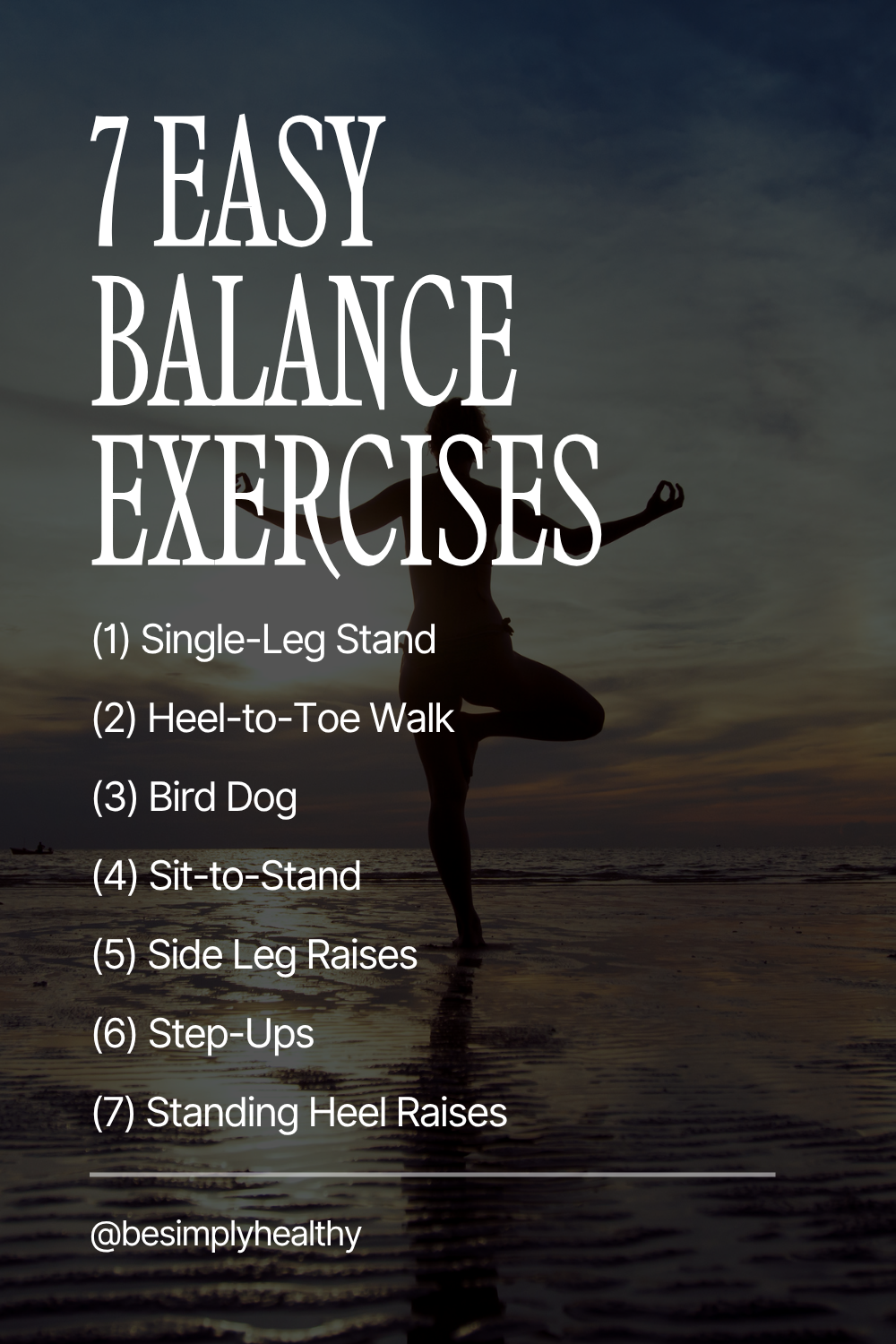
Start with one or two sets of each exercise.
Perform slow, controlled movements.
1. Single-Leg Stand
How to do it:
- •Stand beside a sturdy chair.
- •Lift one foot a few inches off the floor.
- •Hold for 10–30 seconds.
- •Repeat on both sides.
Progression:
Reduce hand support or gradually increase hold time.
2. Heel-to-Toe Walk
Walk in a straight line, placing one foot directly in front of the other.
Focus on slow, controlled steps.
3. Sit-to-Stand
Rise from a chair without using your hands whenever possible.
Slowly sit back down.
Benefits:
- •Leg strength
- •Core stability
- •Functional independence
4. Bird Dog
Begin on your hands and knees.
Extend one arm and the opposite leg while keeping your spine neutral.
Hold briefly before switching sides.
5. Glute Bridge
Lie on your back with knees bent.
Lift your hips until your shoulders, hips, and knees form a straight line.
Lower slowly.
6. Side Leg Raises
Stand tall while holding a chair if needed.
Lift one leg to the side without leaning.
Return with control.
7. Step-Ups
Step onto a sturdy platform or bottom stair.
Step back down slowly.
Alternate legs.
8. Tandem Stand
Place one foot directly in front of the other.
Hold the position while maintaining an upright posture.
9. March in Place
Lift your knees slowly while maintaining an upright posture.
Focus on control rather than speed.
10. Standing Heel Raises
Rise onto your toes.
Pause briefly before lowering.
This strengthens the calves and ankles.
11. Standing Toe Raises
Lift the front of your feet while keeping your heels on the floor.
This strengthens muscles at the front of the lower legs that support walking stability.
12. Clock Reach
Stand on one leg while gently reaching the opposite foot toward imaginary clock positions around you.
Move slowly and return to the center after each reach.
Weekly Beginner Balance Routine
A simple routine may look like this:
Monday
- •Single-Leg Stand
- •Heel-to-Toe Walk
- •Sit-to-Stand
Wednesday
- •Bird Dog
- •Glute Bridge
- •Side Leg Raises
Friday
- •Step-Ups
- •Tandem Stand
- •Heel Raises
- •March in Place
Aim for 10–15 minutes per session.
Focus on good technique rather than completing more repetitions.
30-Day Beginner Balance Improvement Plan
Improving balance is similar to building strength—it happens through consistent practice and gradual progression.
Week 1: Build Awareness
Goals:
- •Learn proper exercise technique.
- •Practice three days this week.
- •Use a sturdy chair whenever needed.
- •Hold each balance position for 10–15 seconds.
Focus on:
- •Single-Leg Stand
- •Heel-to-Toe Walk
- •Sit-to-Stand
Week 2: Increase Stability
Goals:
- •Increase hold times to 20 seconds.
- •Add Bird Dog and Step-Ups.
- •Reduce hand support whenever it feels safe.
Focus on moving slowly and maintaining good posture throughout each repetition.
Week 3: Build Confidence
Goals:
- •Hold single-leg positions for 25–30 seconds.
- •Add Tandem Stand and Clock Reach.
- •Perform exercises with less reliance on support when appropriate.
Notice improvements in confidence during everyday activities such as climbing stairs or carrying groceries.
Week 4: Progress Safely
Goals:
- •Combine balance exercises into a 15-minute routine.
- •Add gentle challenges such as slower movements or light reaches while maintaining good form.
- •Continue strengthening your legs and core.
Remember that improvement is rarely perfectly linear. Some days will feel easier than others, and that's completely normal.
Common Mistakes to Avoid
Practicing Too Quickly
Balance improves through controlled movement rather than speed.
Move slowly and focus on maintaining good posture.
Skipping Strength Training
Strong muscles provide the foundation for better balance.
Include exercises that strengthen your:
- •Legs
- •Hips
- •Core
- •Ankles
Looking Down Constantly
Your eyes help maintain balance.
Instead of staring at your feet, focus on a point several feet in front of you whenever possible.
Progressing Too Fast
Avoid making exercises dramatically harder before mastering the basics.
Build confidence gradually.
Holding Your Breath
Breathe normally throughout every exercise.
Holding your breath increases unnecessary tension and may reduce exercise quality.
Ignoring Pain or Dizziness
Balance exercises should feel challenging, not painful.
Stop exercising and seek medical advice if you experience:
- •Sudden dizziness
- •Chest pain
- •Fainting
- •Severe headache
- •Vision changes
- •New weakness
- •Repeated falls
Safety Tips
Balance training should always be performed safely.
For beginners:
- •Exercise near a sturdy chair or countertop.
- •Wear supportive footwear when appropriate.
- •Remove loose rugs or tripping hazards.
- •Practice in a well-lit area.
- •Avoid rushing through movements.
- •Stay hydrated.
If you have recently fallen, have significant mobility limitations, or have been diagnosed with a neurological, vestibular, or musculoskeletal condition, consult your healthcare provider or physical therapist before beginning a new exercise program.
Frequently Asked Questions
How often should I practice balance exercises?
Most beginners benefit from practicing 2–4 days per week. Even short sessions of 10–15 minutes performed consistently can improve balance over time.
How long does it take to improve balance?
Many healthy adults notice improvements after several weeks of consistent practice. Individual progress depends on age, activity level, medical conditions, and exercise consistency.
Does losing weight improve balance?
Excess body weight may make movement more challenging for some people. Combining regular physical activity, healthy nutrition, strength training, and balance exercises can improve movement confidence and functional fitness.
Is yoga good for balance?
Many yoga poses challenge balance while also improving flexibility, strength, and body awareness. Yoga can be an effective complement to dedicated balance exercises.
Are balance boards necessary?
No.
Most people can significantly improve balance using bodyweight exercises alone. Balance boards may provide additional variety for experienced exercisers but are not essential for beginners.
Can walking improve balance?
Walking supports overall health and mobility, but targeted balance exercises provide additional benefits because they challenge stability in ways that walking alone often does not.
Key Takeaways
- •Balance is a trainable skill at nearly every age.
- •Consistent practice is more important than long workouts.
- •Strength, mobility, posture, and coordination all contribute to better balance.
- •Simple bodyweight exercises are effective for most beginners.
- •Improving balance supports safer movement, functional fitness, and healthy aging.
- •Persistent dizziness, sudden balance changes, or repeated falls require medical evaluation.
Conclusion
Balance affects nearly every movement you make, from walking across a room to exercising, climbing stairs, and maintaining independence as you age.
Fortunately, improving balance doesn't require expensive equipment or complicated workouts. By combining simple balance exercises with strength training, regular walking, and consistent practice, most healthy adults can improve stability, confidence, and movement quality over time.
Start with a few minutes several times each week, focus on proper technique, and gradually increase the challenge as your skills improve.
Small improvements practiced consistently often lead to meaningful long-term results.
If you're looking for more evidence-based fitness and nutrition strategies, explore our other beginner-friendly guides on strength training, walking for weight loss, mobility, and healthy eating to continue building a healthier lifestyle.
Comments (0)
Share your thoughts and experiences
No comments yet. Be the first to share your thoughts!