Muscle Mass and Aging: Why It Matters | Evidence-Based Guide
Learn why muscle mass matters as you age, how to prevent age-related muscle loss, and the science-backed nutrition and exercise strategies that help support healthy aging, fat loss, and long-term mobility.
Click a star to rate

Muscle is often associated with athletes and bodybuilders, but it is one of the most important organs for long-term health.
Maintaining muscle mass supports everyday movement, healthy aging, independence, metabolic health, and quality of life. Yet many adults focus only on losing weight without considering whether they are also losing valuable muscle.
Current research consistently shows that regular resistance training, adequate protein intake, and an active lifestyle can help preserve muscle throughout adulthood. While some age-related muscle loss is a normal biological process, healthy habits can slow that decline and improve physical function.
Whether your goal is fat loss, better mobility, improved energy, or healthy aging, protecting your muscle should be a priority.
What Is Muscle Mass?
Muscle mass refers to the amount of skeletal muscle attached to your bones.
Skeletal muscle allows you to:
- •Walk
- •Climb stairs
- •Lift groceries
- •Stand from a chair
- •Maintain posture
- •Exercise
- •Balance safely
- •Perform everyday tasks
Unlike body fat, skeletal muscle is metabolically active tissue that continuously adapts to physical activity and nutrition.
Healthy muscle contributes to much more than strength. It also supports overall health and physical function throughout life.
What Happens to Muscle as You Age?
Beginning around your 30s, adults may gradually lose muscle mass and strength if they are physically inactive.
This process is called sarcopenia, an age-related decline in skeletal muscle mass and function.
The rate of decline varies widely between individuals and is influenced by several lifestyle factors, including:
- •Physical activity levels
- •Resistance training
- •Protein intake
- •Overall diet quality
- •Sleep
- •Chronic illness
- •Recovery
- •Smoking
- •Alcohol intake
The encouraging news is that lifestyle plays a major role.
Research shows that adults who regularly perform resistance training often maintain significantly better muscle strength and physical function than those who remain inactive.
Why Muscle Matters Beyond Appearance
Many people think muscle is only important for aesthetics.
In reality, muscle influences nearly every aspect of healthy aging.
1. Muscle Supports Everyday Independence
Everyday movements rely on muscle.
Examples include:
- •Carrying groceries
- •Picking up children
- •Climbing stairs
- •Walking uphill
- •Gardening
- •Housework
- •Standing from the floor
- •Traveling
Maintaining strength makes these activities easier and may reduce the risk of losing independence later in life.
2. Muscle Supports Healthy Aging
Healthy aging involves more than living longer.
It also means maintaining physical function, mobility, balance, and confidence.
Strength training has consistently been shown to improve physical performance in adults across many age groups, including older adults.
Building strength today helps prepare your body for the decades ahead.
3. Muscle Helps Support Metabolic Health
Muscle tissue is metabolically active.
Although muscle does not dramatically increase calorie burning on its own, preserving lean body mass during weight loss helps maintain resting energy expenditure better than losing muscle.
Muscle also plays an important role in glucose uptake and insulin sensitivity, making it an important component of overall metabolic health.
4. Muscle Supports Bone Health
Bones and muscles work together.
Resistance exercise places healthy mechanical stress on bones while strengthening surrounding muscles.
Combined with adequate calcium, vitamin D, and balanced nutrition, strength training supports healthy bones throughout adulthood.
5. Muscle Helps Improve Balance
Falls become increasingly common with advancing age.
Research suggests that improving lower-body strength and overall physical function can help support better balance and mobility.
Exercises such as squats, step-ups, lunges, and resistance-band movements can help improve functional strength when performed safely.
Common Causes of Muscle Loss
Although aging contributes to muscle loss, it is not the only reason.
Several modifiable lifestyle factors also play an important role.
Physical Inactivity
The body adapts to how it is used.
When muscles are rarely challenged, they gradually become smaller and weaker.
Even relatively short periods of inactivity due to illness or injury can contribute to measurable muscle loss.
Inadequate Protein Intake
Protein provides amino acids that help support muscle protein synthesis.
Consuming too little protein over long periods may make maintaining muscle more difficult, particularly during aging or weight loss.
Crash Dieting
Very low-calorie diets may reduce body weight quickly, but they often result in the loss of both fat and lean body mass.
For most adults, gradual, sustainable weight loss combined with resistance training better supports muscle preservation.
Poor Sleep
Sleep plays an important role in recovery and adaptation.
Chronic sleep deprivation may negatively affect exercise recovery, physical performance, and the ability to maintain healthy habits.
Chronic Illness
Some medical conditions, medications, and prolonged hospital stays can accelerate muscle loss.
Individuals with chronic health conditions should work with their healthcare team before beginning new exercise or nutrition programs.
Can You Build Muscle After 50?
Yes.
One of the biggest myths surrounding aging is that muscle growth completely stops after middle age.
Current evidence does not support that belief.
Adults in their 50s, 60s, 70s, and beyond can improve strength and increase muscle size through progressive resistance training.
Results may occur more gradually than in younger adults, but meaningful improvements remain achievable.
Consistency matters far more than age.
For beginners, even modest improvements in strength can translate into meaningful improvements in daily function, confidence, and overall quality of life.
Resistance Training: The Most Effective Strategy
Resistance training is considered one of the most effective lifestyle interventions for maintaining muscle throughout adulthood.
It works by challenging muscles to adapt over time.
Examples include:
- •Bodyweight exercises
- •Resistance bands
- •Dumbbells
- •Kettlebells
- •Weight machines
- •Cable systems
Beginners often benefit from performing resistance training two to three times each week while gradually increasing resistance as exercises become easier.
Good technique should always take priority over heavier weights. ## How Much Strength Training Do You Need?
Most major exercise guidelines recommend that adults perform muscle-strengthening activities involving all major muscle groups at least two days each week.
For beginners focused on healthy aging and fat loss, a simple routine performed consistently is often more effective than an advanced program that is difficult to maintain.
A practical weekly routine might include:
Day 1
- •Squats or chair squats
- •Push-ups (wall, incline, or floor)
- •Resistance-band rows
- •Glute bridges
- •Planks
Day 2
- •Lunges or split squats
- •Dumbbell shoulder press
- •Romanian deadlifts with light weights
- •Lat pulldowns or band pull-aparts
- •Farmer carries
Perform one to three sets of each exercise while maintaining good technique.
As movements become easier, gradually increase resistance, repetitions, or training volume. This principle is known as progressive overload and is one of the most important drivers of long-term strength improvements.
Nutrition for Preserving Muscle
Exercise provides the stimulus for muscle adaptation, but nutrition provides the building blocks.
A balanced eating pattern rich in protein, fruits, vegetables, whole grains, legumes, nuts, seeds, and healthy fats supports both muscle health and overall well-being.
Prioritize Protein
Protein supplies essential amino acids that support muscle protein synthesis.
High-quality protein sources include:
- •Fish
- •Chicken
- •Turkey
- •Eggs
- •Greek yogurt
- •Cottage cheese
- •Milk
- •Soy foods
- •Tofu
- •Tempeh
- •Beans
- •Lentils
- •Chickpeas
Current research suggests that many physically active adults and older adults may benefit from consuming more protein than the minimum Recommended Dietary Allowance, particularly when trying to preserve muscle during weight loss. Individual needs vary depending on age, activity level, body size, and medical conditions.
Including protein at each meal may help distribute intake throughout the day.
Don't Fear Healthy Carbohydrates
Carbohydrates provide energy for resistance training and everyday activity.
Nutritious carbohydrate-rich foods include:
- •Oats
- •Brown rice
- •Quinoa
- •Potatoes
- •Sweet potatoes
- •Beans
- •Fruit
- •Vegetables
Rather than eliminating carbohydrates, choose minimally processed options that also provide fiber, vitamins, and minerals.
Healthy Fats Matter Too
Healthy dietary fats support overall health and help make meals satisfying.
Examples include:
- •Avocados
- •Olive oil
- •Nuts
- •Seeds
- •Fatty fish
A balanced diet containing all three macronutrients generally supports sustainable healthy eating.
Protein Timing: Does It Matter?
Many people wonder whether they need to consume protein immediately after exercising.
Current evidence suggests that total daily protein intake is more important than precise timing for most recreational exercisers.
Eating protein within a reasonable period before or after training can help support recovery, but consistently meeting daily protein needs appears to have the greatest impact.
Muscle and Weight Loss
One of the biggest mistakes people make during weight loss is focusing only on reducing body weight.
The goal should be improving body composition.
That means reducing excess body fat while preserving as much lean muscle mass as possible.
Strategies that help include:
- •Resistance training
- •Adequate protein intake
- •Gradual calorie reduction
- •Sufficient sleep
- •Regular physical activity
Crash diets that involve severe calorie restriction without exercise increase the likelihood of losing muscle along with fat.
A slower, sustainable approach often produces better long-term outcomes.
Lifestyle Habits That Support Muscle Health
Exercise and nutrition are important, but they are only part of the picture.
Stay Physically Active
Movement throughout the day complements structured exercise.
Simple ways to increase activity include:
- •Walking after meals
- •Taking the stairs
- •Gardening
- •Household chores
- •Playing with children
- •Cycling
- •Recreational sports
Prioritize Sleep
Adults generally benefit from obtaining sufficient, high-quality sleep each night.
Sleep supports recovery, exercise performance, and overall health.
Manage Stress
Chronic stress can make it more difficult to maintain healthy habits.
Helpful strategies include:
- •Mindfulness
- •Deep breathing
- •Spending time outdoors
- •Regular physical activity
- •Maintaining social connections
Avoid Smoking
Smoking is associated with numerous adverse health effects and may negatively influence muscle and physical function over time.
If you smoke, seeking support to quit can provide wide-ranging health benefits.
Common Myths About Muscle and Aging
Myth 1: Muscle Loss Is Completely Unavoidable
Reality:
Although some decline occurs with age, regular resistance training and good nutrition can substantially slow muscle loss and improve physical function.
Myth 2: Walking Alone Is Enough
Reality:
Walking is excellent for cardiovascular health, but it does not provide the same muscle-building stimulus as resistance training.
Combining both produces greater overall health benefits.
Myth 3: Strength Training Is Dangerous for Older Adults
Reality:
When performed with appropriate instruction and progression, resistance training is considered safe and effective for most adults.
Individuals with medical conditions should consult their healthcare provider before beginning a new exercise program.
Myth 4: You Need Heavy Weights
Reality:
Muscles respond to challenge, not simply heavy loads.
Bodyweight exercises, resistance bands, and lighter weights performed with proper effort can effectively improve strength, especially for beginners.
Signs You May Be Losing Muscle
Although only a healthcare professional can diagnose sarcopenia, possible warning signs include:
- •Difficulty climbing stairs
- •Reduced grip strength
- •Slower walking speed
- •Trouble carrying groceries
- •Increased fatigue during everyday activities
- •Difficulty standing from a chair
- •Declining physical performance
If you notice these changes, discussing them with your healthcare provider is worthwhile.
Frequently Asked Questions
What is sarcopenia?
Sarcopenia is the age-related loss of skeletal muscle mass, muscle strength, and physical function.
Although some muscle loss is a natural part of aging, regular resistance training, adequate nutrition, and an active lifestyle can help slow its progression and improve physical performance.
Can you really build muscle after age 50?
Yes.
Research consistently demonstrates that adults in their 50s, 60s, 70s, and beyond can improve muscle strength and increase muscle size with progressive resistance training.
Progress may occur more gradually than in younger adults, but meaningful improvements remain possible at almost any age.
How much protein do I need to maintain muscle?
Protein needs vary depending on age, body size, physical activity, and overall health.
The Recommended Dietary Allowance (RDA) for healthy adults is 0.8 grams of protein per kilogram of body weight per day, but many experts suggest that older adults and physically active individuals may benefit from higher intakes, particularly when preserving muscle during weight loss.
If you have kidney disease or another medical condition requiring dietary modification, consult your healthcare provider or a registered dietitian before significantly increasing protein intake.
Is walking enough to prevent muscle loss?
Walking is one of the best forms of exercise for cardiovascular health, mental well-being, and daily activity.
However, walking alone generally does not provide enough resistance to maximize muscle maintenance.
Adding resistance training two or more times each week complements walking and provides additional benefits for muscle strength, bone health, and functional fitness.
What are the best beginner strength exercises?
Simple exercises include:
- •Chair squats
- •Bodyweight squats
- •Wall push-ups
- •Incline push-ups
- •Resistance-band rows
- •Glute bridges
- •Step-ups
- •Dumbbell presses
- •Farmer carries
- •Planks
Choose exercises appropriate for your fitness level and focus on proper technique before increasing resistance.
Should I take protein supplements?
Whole foods should form the foundation of a healthy eating pattern.
Protein powders and ready-to-drink protein beverages can be convenient when meeting daily protein needs is difficult, but they are not required for most healthy adults.
What about creatine?
Creatine monohydrate is one of the most extensively researched sports nutrition supplements.
Evidence suggests it may improve strength and muscle gains when combined with resistance training, including in some older adults.
However, supplementation is not necessary for everyone and should be discussed with a healthcare professional if you have kidney disease, take medications, or have concerns about supplementation.
Current evidence supports creatine as a supplement—not a replacement—for regular exercise and balanced nutrition.
Key Takeaways
If you remember only a few points from this guide, make them these:
- •Muscle is essential for healthy aging, not just physical appearance.
- •Age-related muscle loss can often be slowed through healthy lifestyle habits.
- •Resistance training is one of the most effective ways to preserve strength and physical function.
- •Protein-rich foods support muscle maintenance when combined with exercise.
- •Walking is valuable but should ideally be paired with strength training.
- •Sustainable weight loss focuses on preserving muscle while reducing excess body fat.
- •Healthy habits practiced consistently are more effective than short-term extreme programs.
Putting It All Together
Improving muscle health does not require perfection.
Small, consistent actions performed over months and years often produce the greatest long-term benefits.
You can start today by:
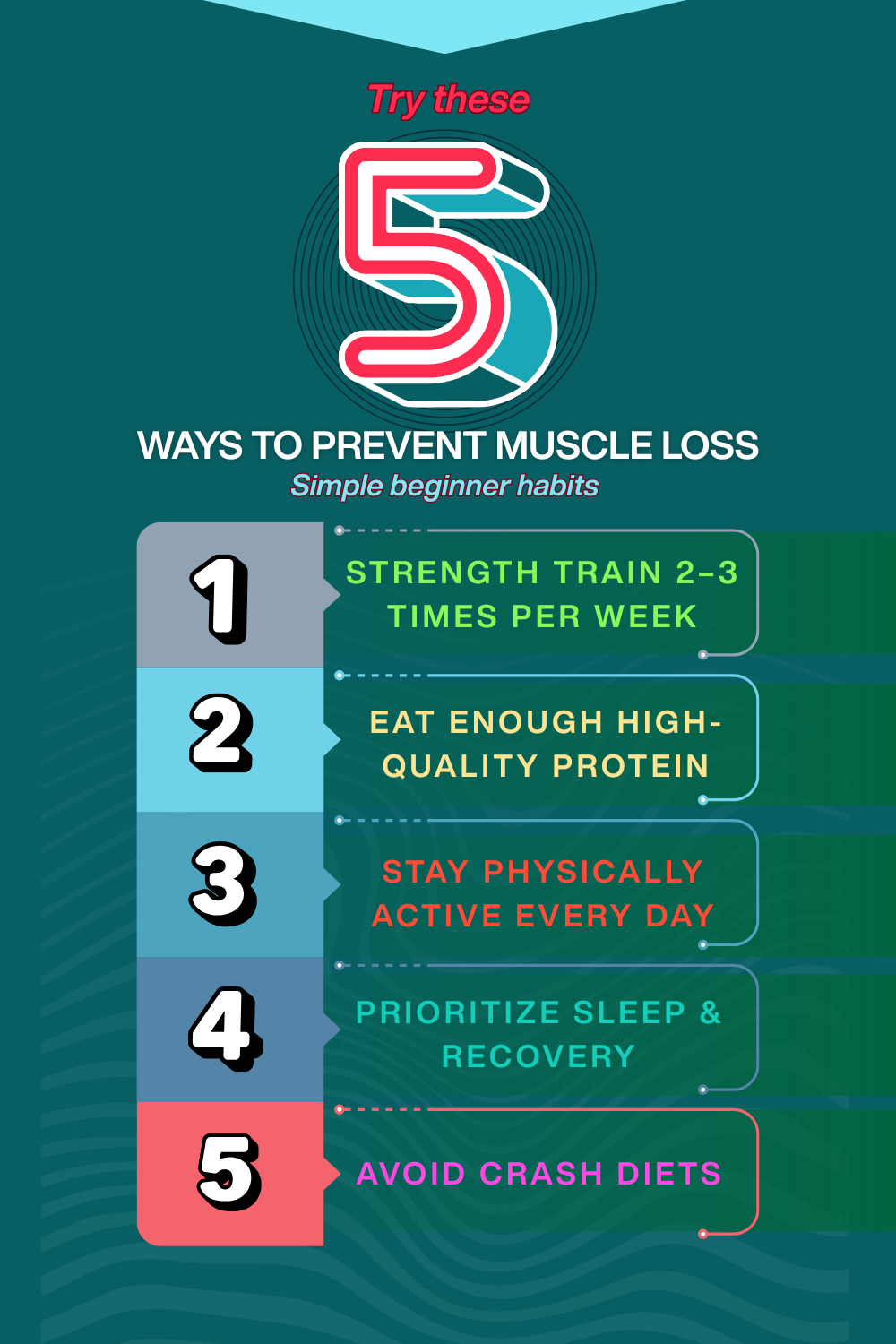
- •Performing two or three strength-training sessions each week.
- •Including high-quality protein with your meals.
- •Staying physically active every day.
- •Prioritizing sleep and recovery.
- •Gradually increasing the challenge of your workouts.
- •Choosing sustainable habits instead of restrictive diets.
Every workout, balanced meal, and active day is an investment in your future mobility, independence, and quality of life.
Conclusion
Muscle is one of the body's most valuable assets throughout life.
While aging naturally affects muscle mass and strength, research consistently shows that lifestyle choices have a powerful influence on how well we maintain physical function over time.
Regular resistance training, adequate protein intake, balanced nutrition, quality sleep, and an active lifestyle work together to support healthy muscles and overall well-being.
Whether your goal is healthy aging, fat loss, improved mobility, or simply feeling stronger in everyday life, preserving muscle deserves to be a priority.
The best time to begin building healthy habits was years ago.
The second-best time is today.
For more evidence-based nutrition guides, beginner-friendly workout plans, and practical healthy aging strategies, explore our complete resource library and subscribe to our newsletter for the latest science-backed articles delivered directly to your inbox.
Comments (0)
Share your thoughts and experiences
No comments yet. Be the first to share your thoughts!