
What Is Functional Fitness? Complete Evidence-Based Beginner Guide for Everyday Strength and Fat Loss
Learn what functional fitness is, how it works, its benefits for fat loss, strength, mobility, balance, and healthy aging. Evidence-based beginner guide with practical exercises and workout plans.
Click a star to rate
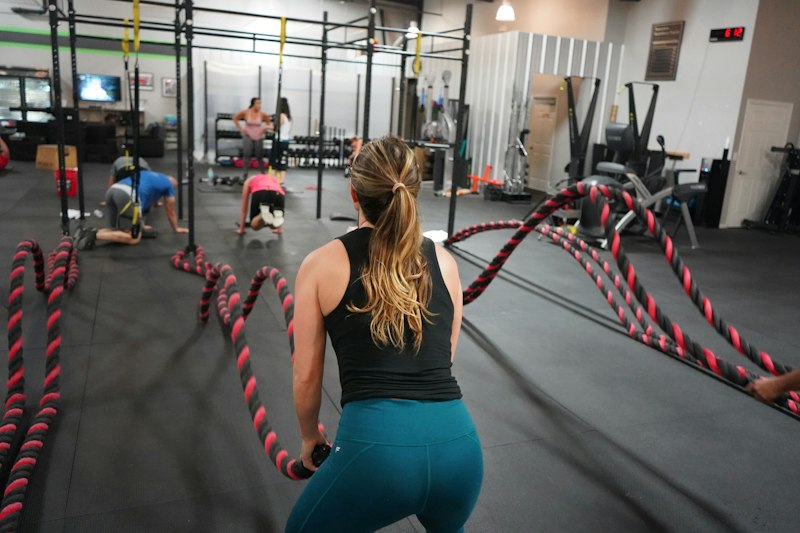
Functional fitness is one of the most talked-about fitness trends, yet many people still are not sure what it actually means.
Some people assume functional fitness is only for athletes. Others think it involves complicated exercises performed on unstable surfaces. In reality, functional fitness is much simpler and far more practical than many fitness myths suggest.
At its core, functional fitness is exercise that helps your body perform real-life activities more effectively.
Rather than focusing exclusively on individual muscles, functional fitness emphasizes movement patterns that train multiple muscle groups to work together. The goal is not simply to look stronger. The goal is to move better, feel stronger, and improve your ability to perform everyday activities.
For beginners focused on fat loss, long-term health, and sustainable fitness, functional fitness offers a practical approach that connects exercise to daily life.
What Is Functional Fitness?
Functional fitness is a style of exercise that trains movement patterns used during everyday activities.
Instead of isolating a single muscle, functional exercises typically involve multiple joints and muscle groups working together.
Examples include:
- •Squatting
- •Lifting
- •Carrying
- •Walking
- •Climbing stairs
- •Pushing
- •Pulling
- •Rotating
- •Reaching
These movements closely mirror the activities most people perform throughout daily life.
For example:
A squat resembles sitting down and standing up.
A carry resembles carrying grocery bags.
A deadlift resembles picking an object up from the floor.
A step-up resembles climbing stairs.
Because these exercises reflect real-world movement patterns, they often provide benefits that extend beyond the gym.
Functional Fitness Definition in Simple Terms
If traditional exercise helps you become better at exercising, functional fitness helps you become better at life.
That does not mean traditional strength training is ineffective. In fact, strength training remains one of the most evidence-based forms of exercise available.
Functional fitness simply emphasizes applying strength to practical movement patterns.
The objective is to improve:
- •Strength
- •Balance
- •Mobility
- •Coordination
- •Stability
- •Endurance
- •Confidence in movement
These qualities influence how comfortably and safely people move throughout the day.
Why Functional Fitness Has Become So Popular
Many people are becoming less interested in exercise programs focused only on appearance.
Instead, they want workouts that help them:
- •Move without pain
- •Improve energy levels
- •Perform daily tasks more easily
- •Stay active as they age
- •Support healthy body composition
- •Build confidence
Functional fitness addresses these goals directly.
Rather than asking, "How much can you lift?" functional fitness often asks:
"How well can you move?"
This shift in perspective has contributed significantly to its popularity.
The Science Behind Functional Fitness
Functional fitness is not based on a unique physiological system.
Instead, it applies established exercise science principles to practical movement.
Research consistently supports resistance training for improving:
- •Muscular strength
- •Physical function
- •Bone health
- •Metabolic health
- •Mobility
- •Quality of life
Organizations including the American College of Sports Medicine (ACSM), the World Health Organization (WHO), and the Centers for Disease Control and Prevention (CDC) recommend regular strength training as part of a healthy lifestyle.
Functional fitness incorporates these evidence-based principles while emphasizing movements that transfer into everyday activities.
What Current Research Suggests
Research on functional training generally indicates improvements in:
- •Strength
- •Balance
- •Functional performance
- •Mobility
- •Physical independence
Studies involving older adults frequently show improvements in activities of daily living when resistance training and movement-based exercise programs are implemented consistently.
Current evidence is strongest for the role of resistance training in improving physical function. Functional fitness can be viewed as one practical application of those principles.
Functional Fitness vs Traditional Strength Training
One of the most common questions beginners ask is whether functional fitness is better than traditional strength training.
The answer is that both approaches can be valuable.
The key difference lies in emphasis.
| Functional Fitness | Traditional Strength Training |
|---|---|
| Focuses on movement patterns | Focuses on muscles |
| Emphasizes coordination | Emphasizes muscle growth |
| Often includes balance challenges | Usually performed in stable environments |
| Prioritizes movement quality | Prioritizes strength and hypertrophy |
| Directly relates to daily activities | Often focuses on gym performance |
For many people, the most effective approach combines both methods.
For example:
A workout might include:
- •Squats
- •Deadlifts
- •Rows
- •Farmer carries
- •Push-ups
These exercises improve strength while also supporting practical movement abilities.
The Core Principles of Functional Fitness
Most effective functional fitness programs are built around several foundational principles.
Movement Over Muscles
Instead of asking:
"What muscle am I training?"
Functional fitness often asks:
"What movement am I training?"
This subtle shift changes how workouts are designed.
Multi-Joint Exercises
Many functional exercises involve several joints moving simultaneously.
Examples include:
- •Squats
- •Lunges
- •Deadlifts
- •Push-ups
- •Rows
These exercises tend to recruit more muscle mass than isolation movements.
Stability and Control
Daily activities require balance and body awareness.
Functional training often includes exercises that challenge:
- •Stability
- •Coordination
- •Control
Transfer to Real Life
Exercises are selected because they improve practical movement abilities.
The goal is improved performance both inside and outside the gym.
The 7 Fundamental Functional Movement Patterns
Most functional fitness programs revolve around a small number of essential movement patterns.
Understanding these patterns helps beginners create effective workouts.
1. Squat
The squat is one of the most important human movement patterns.
Examples:
- •Bodyweight squat
- •Goblet squat
- •Box squat
Benefits:
- •Leg strength
- •Hip mobility
- •Everyday movement capacity
Every time you sit down or stand up, you perform a variation of a squat.
2. Hinge
The hinge teaches proper bending mechanics.
Examples:
- •Deadlift
- •Romanian deadlift
- •Hip hinge drill
Benefits:
- •Posterior-chain strength
- •Safer lifting mechanics
- •Glute development
The hinge is essential for picking objects up safely.
3. Push
Push movements help develop upper-body strength.
Examples:
- •Push-ups
- •Dumbbell presses
- •Overhead presses
Benefits:
- •Chest strength
- •Shoulder strength
- •Triceps development
4. Pull
Pulling helps balance pushing movements.
Examples:
- •Rows
- •Pull-downs
- •Assisted pull-ups
Benefits:
- •Back strength
- •Improved posture
- •Shoulder health
5. Carry
Carries are among the most practical exercises available.
Examples:
- •Farmer carry
- •Suitcase carry
- •Front carry
Benefits:
- •Grip strength
- •Core stability
- •Full-body coordination
6. Rotation
Many daily activities involve rotational movement.
Examples:
- •Cable rotations
- •Medicine-ball rotations
- •Controlled torso rotations
Benefits:
- •Core function
- •Movement control
- •Athletic development
7. Gait and Locomotion
Walking remains one of the most functional human activities.
Examples:
- •Walking
- •Hiking
- •Stair climbing
- •Loaded walking
Benefits:
- •Cardiovascular fitness
- •Endurance
- •Functional capacity
Functional Fitness Benefits
Functional fitness provides numerous potential benefits for beginners.
Improved Everyday Strength
One of the biggest advantages is practical strength.
Practical strength means being able to:
- •Carry groceries
- •Lift boxes
- •Move furniture
- •Perform household tasks
with greater confidence and less effort.
Unlike gym-specific strength, practical strength directly affects daily life.
Better Balance
Balance naturally becomes more important with age.
Exercises that challenge stability may help improve balance and body awareness.
This is particularly valuable for older adults who want to maintain independence.
Increased Mobility
Mobility refers to the ability to move joints through useful ranges of motion.
Many functional exercises encourage mobility while simultaneously building strength.
This combination can support healthier movement patterns.
Enhanced Coordination
Daily activities rarely involve muscles working in isolation.
Functional exercises teach the body to coordinate multiple systems together.
This may improve movement efficiency.
Support for Healthy Aging
Maintaining physical function becomes increasingly important over time.
Functional fitness may help support:
- •Independence
- •Confidence
- •Mobility
- •Strength
- •Physical resilience
These qualities contribute significantly to quality of life.
Functional Fitness for Fat Loss
Many people discover functional fitness while searching for effective fat-loss strategies.
Functional fitness is not a magic solution for weight loss.
No exercise program can guarantee fat loss.
However, functional fitness can support weight-management efforts in several meaningful ways.
Increased Energy Expenditure
Multi-joint exercises often recruit large amounts of muscle mass.
This can increase overall workout demand.
Exercises such as:
- •Squats
- •Lunges
- •Carries
- •Rows
- •Deadlifts
typically require substantial energy.
Preserving Lean Muscle Mass
One challenge during fat loss is maintaining muscle mass while reducing body fat.
Strength-focused functional exercises can help provide the stimulus needed to preserve muscle when combined with adequate protein intake and an appropriate calorie deficit.
Preserving lean muscle mass is important because muscle contributes to strength, physical function, and overall metabolic health.
Building Sustainable Habits
Many people abandon fitness programs because they fail to see how exercise connects to daily life.
Functional fitness often feels more meaningful because improvements become noticeable outside the gym.
Examples include:
- •Carrying groceries more comfortably
- •Walking longer distances
- •Climbing stairs with less fatigue
- •Performing daily tasks with greater confidence
These practical wins can improve adherence and consistency.
Improving Movement Confidence
Confidence is frequently overlooked in fitness discussions.
When people feel stronger and more capable, they may become more willing to participate in physical activities.
This can increase overall activity levels and support long-term health goals.
Common Functional Fitness Myths
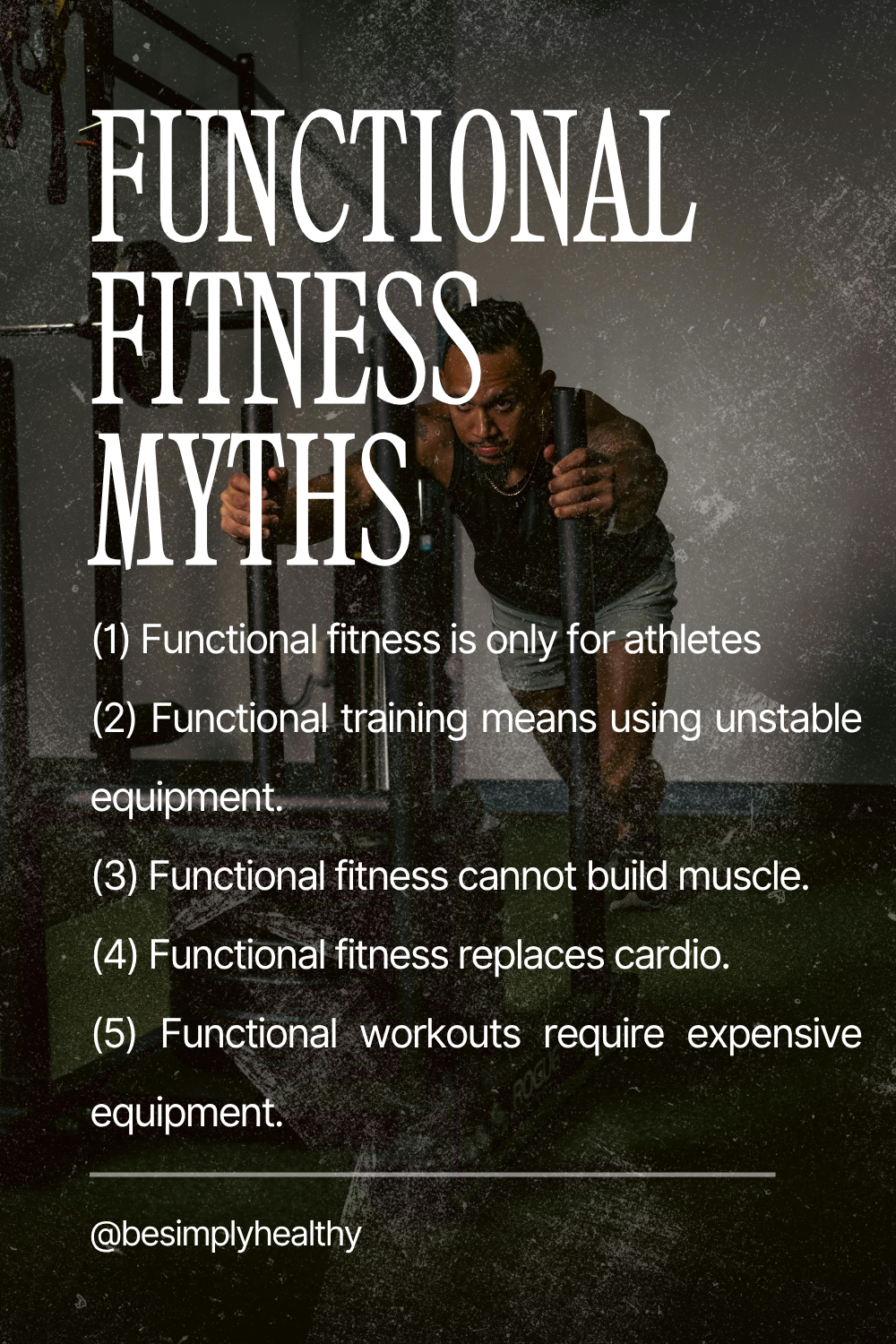
Functional fitness is surrounded by several misconceptions.
Let's separate fact from fiction.
Myth #1: Functional Fitness Is Only for Athletes
Fact:
Functional fitness can benefit nearly anyone.
Athletes often use functional training, but so do:
- •Beginners
- •Office workers
- •Parents
- •Older adults
- •Recreational exercisers
The goal is improved movement, not athletic performance.
Myth #2: Functional Fitness Requires Fancy Equipment
Fact:
Many effective functional exercises require little or no equipment.
Examples include:
- •Squats
- •Push-ups
- •Step-ups
- •Planks
- •Walking lunges
Equipment can be helpful, but it is not required.
Myth #3: Functional Fitness Cannot Build Muscle
Fact:
Muscle growth depends primarily on progressive overload.
If functional exercises are progressively challenged over time, muscle growth can occur.
That said, bodybuilding-style training may be more efficient for maximizing muscle size.
Myth #4: Functional Fitness Is Just Balance Training
Fact:
Balance may be included, but functional fitness encompasses much more.
Programs often include:
- •Strength development
- •Mobility work
- •Stability training
- •Cardiovascular conditioning
- •Movement skill development
Myth #5: Functional Fitness Is Better Than All Other Training
Fact:
No single training style is best for everyone.
Functional fitness is one tool among many.
The ideal program depends on:
- •Goals
- •Preferences
- •Experience level
- •Health status
- •Available equipment
Who Can Benefit From Functional Fitness?
Functional fitness is highly adaptable.
Beginners
Beginners often benefit because exercises can be scaled to match current abilities.
Simple movements provide an effective foundation for future progress.
Adults Focused on Fat Loss
Functional fitness supports regular activity, strength development, and movement quality.
These factors can contribute to sustainable weight-management efforts.
Older Adults
Maintaining physical function becomes increasingly important with age.
Functional exercises can support independence and confidence.
Busy Professionals
Many professionals spend long hours sitting.
Functional training may help counteract some of the movement limitations associated with sedentary lifestyles.
Parents
Lifting children, carrying supplies, and staying active throughout the day require practical strength.
Functional fitness directly supports these demands.
Beginner Functional Fitness Exercises
If you're new to functional fitness, start with simple exercises.
Master movement quality before increasing difficulty.
Bodyweight Squat
Why it matters:
- •Strengthens the lower body
- •Improves mobility
- •Builds movement confidence
Beginner tip:
Keep your chest up and push your hips back as you lower.
Incline Push-Up
Why it matters:
- •Builds upper-body strength
- •Improves pushing mechanics
Beginner tip:
Use a bench, countertop, or sturdy elevated surface.
Glute Bridge
Why it matters:
- •Strengthens the glutes
- •Reinforces hip extension
Beginner tip:
Focus on squeezing your glutes at the top.
Step-Up
Why it matters:
- •Develops single-leg strength
- •Improves balance
Beginner tip:
Use a stable step or platform.
Farmer Carry
Why it matters:
- •Builds grip strength
- •Challenges the core
- •Improves posture
Beginner tip:
Walk slowly while maintaining good posture.
Plank
Why it matters:
- •Develops core stability
- •Supports overall movement control
Beginner tip:
Focus on maintaining a straight line from head to heels.
Sample Beginner Functional Fitness Workout
The following workout can be performed two to three times per week.
Warm-Up
- •Five minutes of walking
- •Arm circles
- •Hip circles
- •Bodyweight squats
Workout
- Bodyweight Squat
- - 3 sets of 10 repetitions
- Incline Push-Up
- - 3 sets of 8–12 repetitions
- Step-Up
- - 3 sets of 10 repetitions per leg
- Dumbbell Row
- - 3 sets of 10 repetitions
- Farmer Carry
- - 3 rounds of 30–60 seconds
- Plank
- - 3 rounds of 20–45 seconds
Cool Down
- •Easy walking
- •Gentle stretching
The focus should be on quality movement rather than speed.
Functional Fitness Equipment for Beginners
One advantage of functional fitness is flexibility.
You can train effectively with minimal equipment.
No Equipment
Examples:
- •Squats
- •Push-ups
- •Lunges
- •Planks
- •Glute bridges
Resistance Bands
Benefits:
- •Affordable
- •Portable
- •Beginner-friendly
Useful for:
- •Rows
- •Presses
- •Rotational exercises
Dumbbells
Benefits:
- •Versatile
- •Easy to progress
Useful for:
- •Squats
- •Carries
- •Rows
- •Presses
Kettlebells
Benefits:
- •Functional movement emphasis
- •Space-efficient
Useful for:
- •Carries
- •Deadlifts
- •Goblet squats
Medicine Balls
Benefits:
- •Rotational training
- •Power development
Useful for:
- •Rotational drills
- •Throws
- •Core exercises
Common Functional Fitness Mistakes
Many beginners make similar mistakes.
Avoiding them can improve results and reduce frustration.
Mistake #1: Choosing Advanced Exercises Too Soon
Social media often highlights complex movements.
However, mastery of fundamentals is far more important.
Build a foundation first.
Mistake #2: Ignoring Progressive Overload
Functional fitness still requires progression.
Over time, increase:
- •Resistance
- •Repetitions
- •Sets
- •Complexity
Gradually and safely.
Mistake #3: Skipping Recovery
Progress occurs during recovery.
Prioritize:
- •Sleep
- •Nutrition
- •Hydration
- •Rest days
Mistake #4: Chasing Exhaustion
A workout does not need to leave you exhausted to be effective.
Focus on quality and consistency.
Mistake #5: Neglecting Mobility
Mobility supports healthy movement patterns.
Include mobility work regularly.
Functional Fitness and Mobility
Mobility is often misunderstood.
Mobility refers to active control through a range of motion.
Functional fitness frequently integrates mobility into strength training.
Examples include:
- •Deep squats
- •Split squats
- •Controlled lunges
- •Rotational exercises
This approach can help build strength through useful movement ranges.
Functional Fitness and Cardiovascular Health
Although many people associate functional fitness primarily with strength training, cardiovascular fitness remains an important component of overall health.
A complete functional fitness program often includes:
- •Walking
- •Hiking
- •Cycling
- •Rowing
- •Circuit training
- •Low-impact conditioning
These activities can support:
- •Heart health
- •Endurance
- •Energy levels
- •Recovery capacity
The goal is not to replace cardiovascular exercise but to integrate it appropriately.
Functional Fitness and Healthy Aging
One of the strongest arguments for functional fitness is its relevance across the lifespan.
As people age, maintaining physical function becomes increasingly important.
Daily activities require:
- •Strength
- •Balance
- •Mobility
- •Coordination
- •Endurance
Losses in these qualities can affect independence and quality of life.
Research consistently shows that resistance training can help older adults maintain physical function and improve strength.
Functional fitness applies these principles in a practical way by focusing on movements that closely resemble everyday activities.
Examples include:
- •Standing from a chair
- •Carrying objects
- •Climbing stairs
- •Reaching overhead
- •Walking confidently
These are the abilities that often matter most in daily life.
Functional Fitness vs CrossFit
Many people confuse functional fitness with CrossFit.
While there is some overlap, they are not the same thing.
Functional Fitness:
- •Broad training philosophy
- •Focus on movement quality
- •Can be adapted to any fitness level
- •Often emphasizes long-term sustainability
CrossFit:
- •Specific branded training methodology
- •Includes functional movements
- •Often performed at higher intensity
- •Frequently incorporates competitive elements
Some CrossFit workouts are functional.
However, not all functional fitness programs resemble CrossFit.
Beginners should not assume functional fitness requires high-intensity training.
Functional Fitness vs Bodybuilding
Another common comparison is functional fitness versus bodybuilding.
Bodybuilding focuses primarily on maximizing muscle size and symmetry.
Functional fitness focuses primarily on movement performance.
Bodybuilding often emphasizes:
- •Isolation exercises
- •Muscle hypertrophy
- •Physique development
Functional fitness often emphasizes:
- •Movement patterns
- •Coordination
- •Stability
- •Practical strength
Neither approach is inherently superior.
The best choice depends on personal goals.
Many people successfully combine elements of both.
Functional Fitness vs Traditional Cardio
Cardio remains valuable for cardiovascular health.
However, cardio alone may not adequately develop strength.
Functional fitness addresses this limitation by incorporating resistance-based movement patterns.
Walking on a treadmill can improve cardiovascular fitness.
Carrying heavy grocery bags requires strength as well.
A balanced program often includes both.
How to Start Functional Fitness as a Beginner
Starting functional fitness does not require expensive equipment, advanced skills, or complicated programming.
The most effective approach is often the simplest.
Step 1: Master Foundational Movements
Focus first on:
- •Squat
- •Hinge
- •Push
- •Pull
- •Carry
These patterns form the foundation of most effective programs.
Step 2: Prioritize Technique
Good movement quality should come before heavier resistance.
Learning proper technique can improve confidence and long-term progress.
Step 3: Train Consistently
Consistency matters more than perfection.
Two to four training sessions per week can be highly effective for beginners.
Step 4: Progress Gradually
Increase difficulty slowly through:
- •More repetitions
- •More resistance
- •Additional sets
- •More challenging variations
Avoid dramatic increases.
Step 5: Support Training With Nutrition
Exercise and nutrition work together.
For individuals pursuing fat loss, focus on:
- •Adequate protein intake
- •Fruits and vegetables
- •Whole grains
- •Healthy fats
- •Sustainable calorie control
No workout can compensate for consistently poor nutrition habits.
A 4-Week Functional Fitness Beginner Plan
Week 1
Goal:
Learn movement patterns.
Exercises:
- •Squats
- •Incline push-ups
- •Glute bridges
- •Walking
Focus on technique.
Week 2
Goal:
Increase confidence.
Exercises:
- •Squats
- •Push-ups
- •Rows
- •Step-ups
- •Walking
Add one extra set if comfortable.
Week 3
Goal:
Build consistency.
Exercises:
- •Goblet squats
- •Rows
- •Farmer carries
- •Step-ups
- •Planks
Maintain proper movement quality.
Week 4
Goal:
Develop momentum.
Continue progressing gradually.
Track:
- •Repetitions
- •Resistance
- •Workout consistency
- •Energy levels
Small improvements add up.
Signs Functional Fitness Is Working
Many benefits appear outside the gym.
Positive signs include:
- •Climbing stairs more comfortably
- •Carrying groceries more easily
- •Better posture
- •Improved confidence
- •Increased energy
- •Better movement quality
- •Improved workout consistency
These outcomes often matter more than a number on a scale.
Frequently Asked Questions
Is Functional Fitness Good for Weight Loss?
Functional fitness can support weight-loss efforts when combined with appropriate nutrition and a calorie deficit.
It is not inherently superior to other forms of exercise for fat loss.
The best exercise program is often the one you can perform consistently.
How Many Days Per Week Should Beginners Train?
Most beginners can make meaningful progress with two to four sessions per week.
Consistency is more important than frequency alone.
Can Functional Fitness Build Muscle?
Yes.
Muscle growth occurs when training provides sufficient stimulus and progression over time.
Functional exercises can contribute to hypertrophy, although bodybuilding-specific programs may be more efficient for maximizing muscle size.
Do I Need Special Equipment?
No.
Many effective exercises require only body weight.
Additional equipment can expand exercise options but is not essential.
Is Functional Fitness Safe for Older Adults?
Many functional exercises can be adapted for older adults.
However, individuals with medical conditions, injuries, or concerns should consult a qualified healthcare professional before beginning a new exercise program.
Is Functional Fitness Better Than Strength Training?
Functional fitness and strength training overlap significantly.
Most effective functional fitness programs include strength training principles.
The best approach often combines both.
Internal Resources to Continue Learning
If you found this guide helpful, continue building your fitness knowledge with these related topics:
- •Functional Fitness Exercises for Beginners
- •Functional Fitness vs Strength Training
- •Best Mobility Exercises for Everyday Movement
- •Beginner Resistance Training Guide
- •Walking for Fat Loss and Overall Health
- •How Much Protein Do You Need for Fat Loss?
- •Strength Training Mistakes Beginners Should Avoid
- •Sustainable Weight-Loss Habits That Actually Work
Together, these topics create a complete foundation for long-term health, fitness, and body-composition success.
Featured Snippet Summary
What is functional fitness?
Functional fitness is a style of exercise that trains movement patterns used in everyday life. It emphasizes practical movements such as squatting, lifting, carrying, pushing, pulling, and walking. The goal is to improve strength, balance, mobility, coordination, and overall physical function so daily activities become easier and more efficient.
Quick Takeaways
- •Functional fitness trains movements rather than isolated muscles.
- •It can improve strength, mobility, balance, and coordination.
- •Beginners can start with simple bodyweight exercises.
- •Functional fitness may support fat-loss efforts when combined with proper nutrition.
- •It is suitable for a wide range of ages and fitness levels.
- •Consistency matters more than complexity.
- •Practical improvements outside the gym are often the most meaningful measure of success.
Comments (0)
Share your thoughts and experiences
No comments yet. Be the first to share your thoughts!